
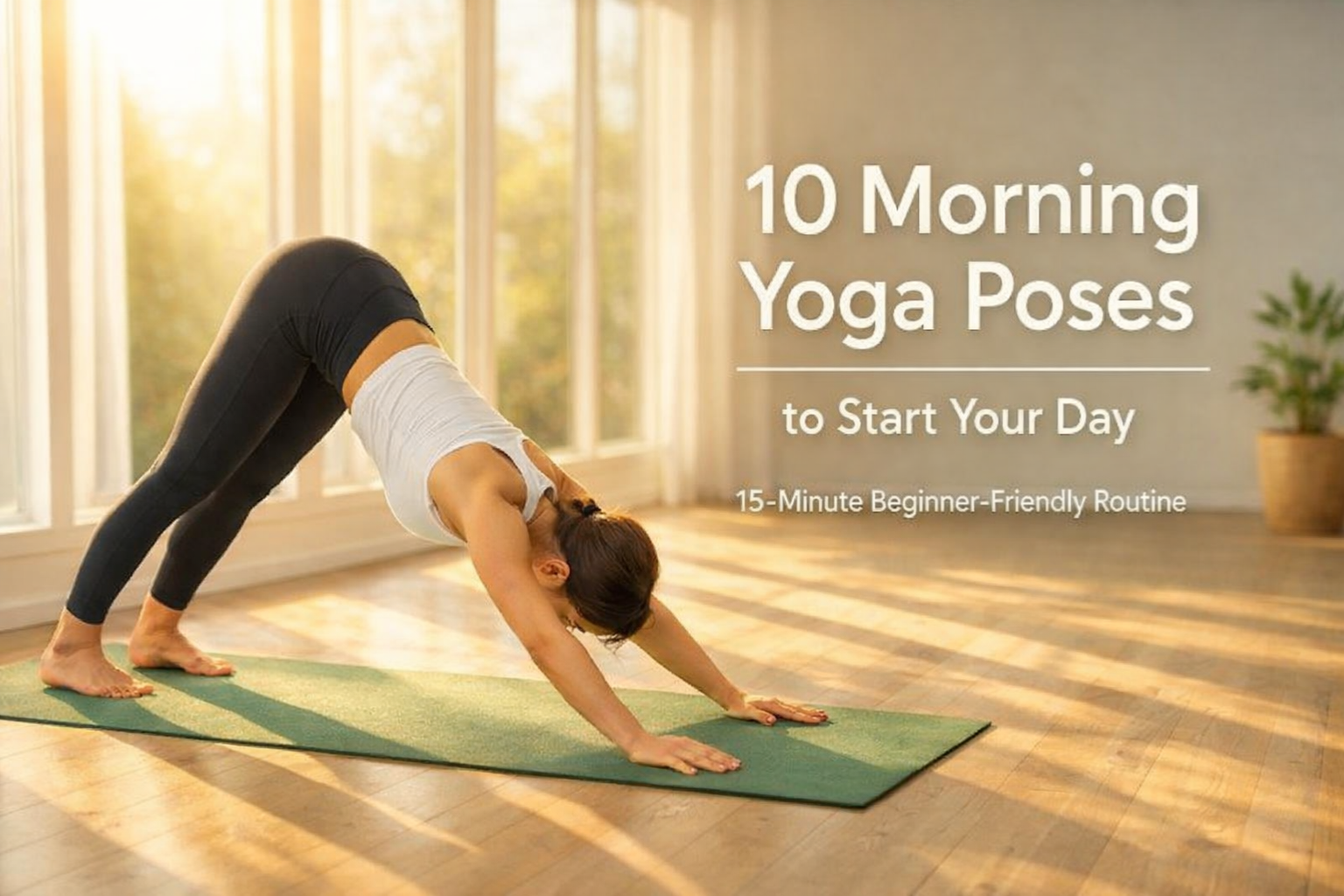
 Yoga & Meditation
Morning yoga poses are one of the simplest ways to shake off that groggy, stiff feeling most of us wake up with. You know the one — your back feels tight, your shoulders are hunched, and your brain hasn’t quite caught up to the fact that it’s a new day.
Research published in the Journal of Clinical Medicine found that just 10 minutes of morning movement can meaningfully lower cortisol levels, the stress hormone that tends to spike right after waking. Yoga teachers have known this for decades.
The good news? You don’t need a full hour on the mat. These 10 best yoga poses for morning will loosen your joints, clear your head, and set a calm, focused tone — all in about 15 minutes.
Here are the 10 best morning yoga poses to wake up your body and start your day right.
Why Morning Yoga?
Doing yoga first gives your body and mind a head start that coffee alone can’t always match. Here’s why it works so well in the morning specifically:
- Loosens overnight stiffness in the spine, hips, and joints after hours of stillness
- Gently activates the nervous system — easing you into alertness without the jolt of caffeine
- Sets a calm, focused mindset before your inbox, commute, or to-do list takes over
Now that you know why morning yoga works, let’s get into the actual poses.
10 Best Morning Yoga Poses to Start Your Day
Child’s Pose (Balasana)
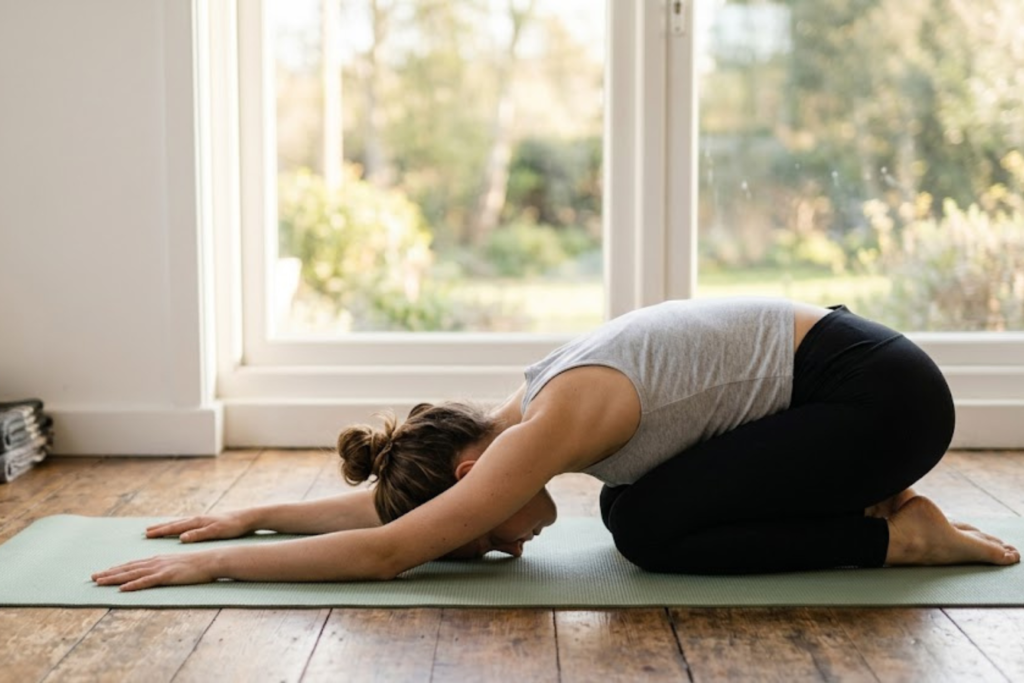
Why it works in the morning: Child’s Pose gently decompresses the spine and signals your nervous system to relax — the perfect way to ease into movement before your body is fully awake.
How to do it:
- Kneel on your mat, knees hip-width apart, big toes touching.
- Sit your hips back toward your heels as far as feels comfortable.
- Stretch your arms forward along the mat, forehead resting down.
- Inhale slowly to lengthen your spine, and exhale to sink a little deeper into the fold.
Hold for: 5–8 slow breaths Beginner tip: Place a folded blanket under your knees if they feel uncomfortable on the floor.
Cat-Cow Stretch (Marjaryasana-Bitilasana)
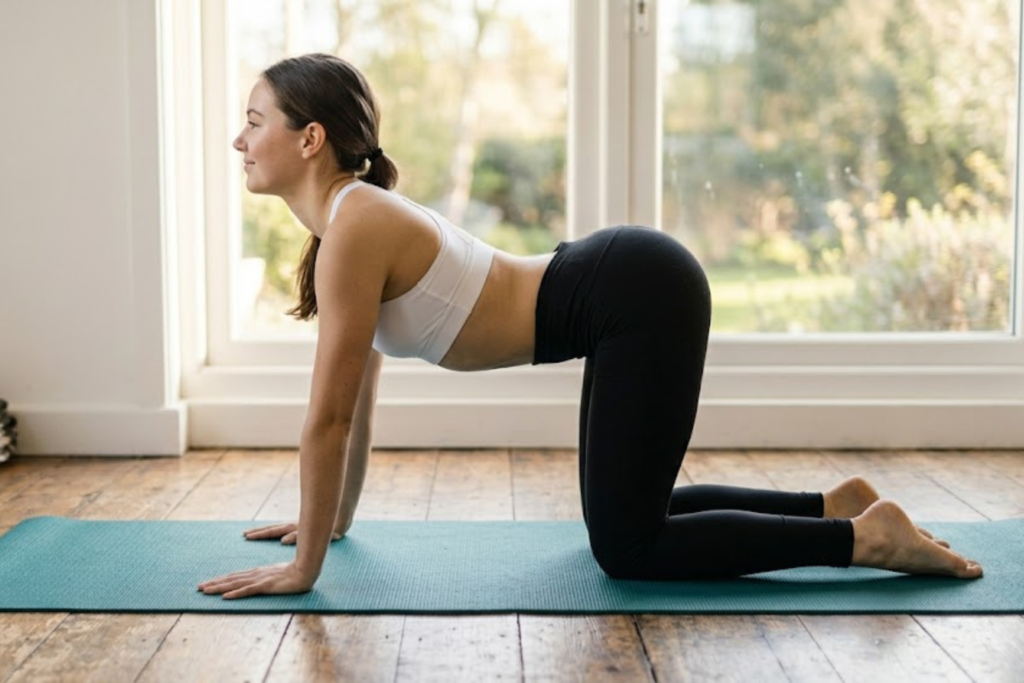
Why it works in the morning: This two-part flow warms up the entire spine, which tends to feel compressed and stiff after a night of sleep. (If you deal with back pain, you might also want to check out our [yoga for back pain] guide.)
How to do it:
- Come onto all fours — wrists under shoulders, knees under hips.
- Inhale and drop your belly toward the mat, lifting your head and tailbone (Cow).
- Exhale and round your spine toward the ceiling, tucking your chin and tailbone (Cat).
- Continue flowing between the two, letting your breath lead the movement.
Hold for: 8–10 rounds Beginner tip: Move slowly — this isn’t a race. The slower you go, the more your spine wakes up.
Downward-Facing Dog (Adho Mukha Svanasana)
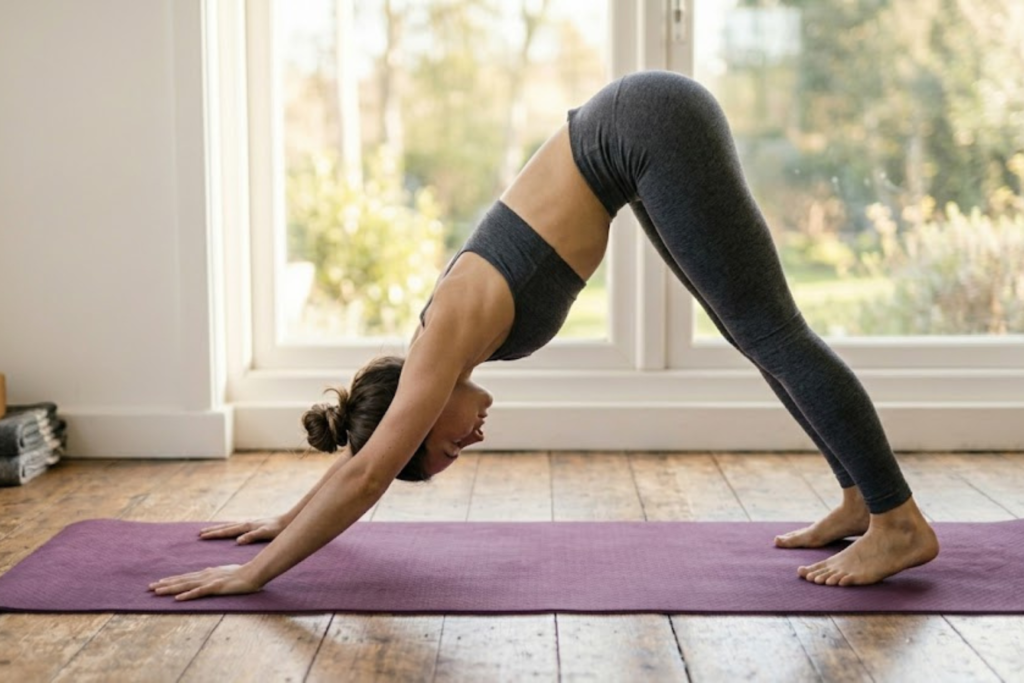
Why it works in the morning: Downward Dog is essentially a full-body stretch in one shape — it hits your hamstrings, calves, shoulders, and back all at once.
How to do it:
- From all fours, tuck your toes and press your hips up and back.
- Straighten your legs as much as feels natural — a slight bend in the knees is completely fine.
- Press your palms firmly into the mat and let your head hang between your arms.
- Inhale to lengthen your spine, and exhale to press your heels a little closer to the floor.
Hold for: 5–8 breaths Beginner tip: Bent knees are your friend here. Straight legs come with time.
Low Lunge (Anjaneyasana)
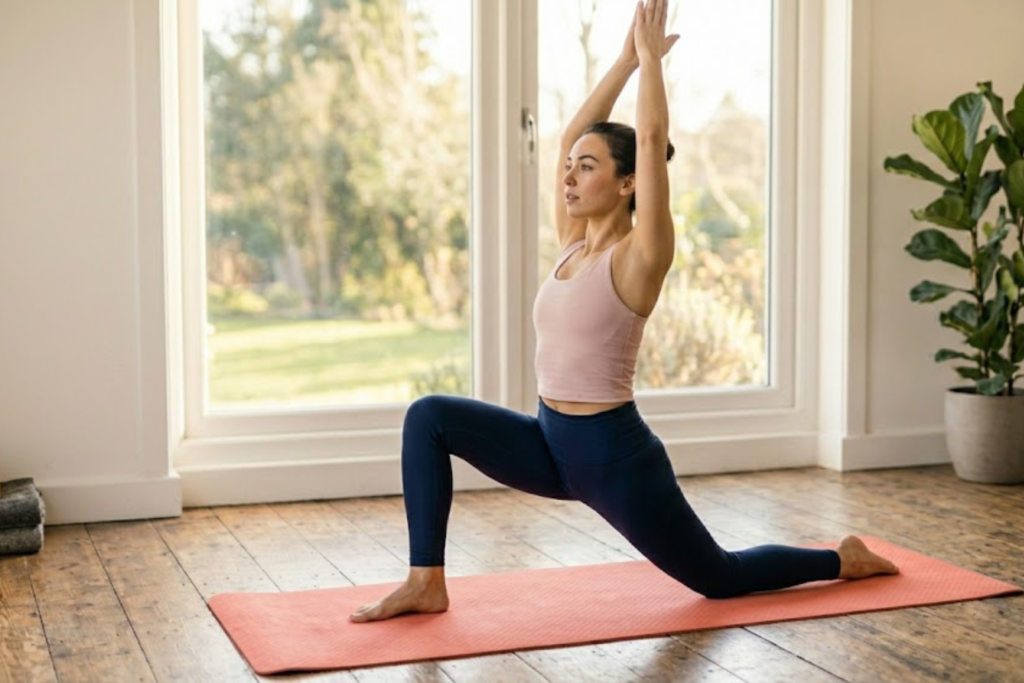
Why it works in the morning: After hours of lying down, your hip flexors are shortened and tight — Low Lunge targets exactly that.
How to do it:
- From Downward Dog, step your right foot forward between your hands.
- Lower your left knee to the mat, untucking the toes.
- Shift your hips forward gently until you feel a stretch in your left hip.
- Inhale and raise your arms overhead, exhale and sink your hips a touch deeper.
Hold for: 5 breaths each side Beginner tip: Place a folded blanket under your back knee if the mat feels hard.
Standing Forward Fold (Uttanasana)
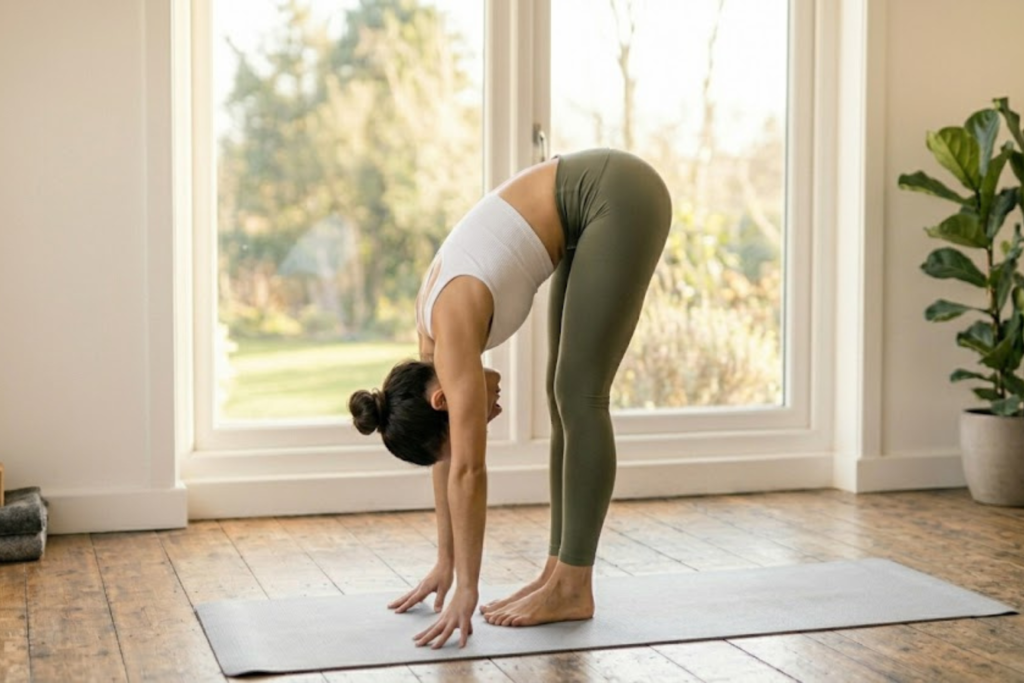
Why it works in the morning: This pose stretches the hamstrings and increases blood flow to the brain — which is exactly what you need when you’re still half asleep.
How to do it:
- Stand with feet hip-width apart.
- Hinge at your hips (not your waist) and fold forward.
- Let your arms hang, or grab opposite elbows and sway gently side to side.
- Inhale to lengthen your spine slightly, exhale to release deeper into the fold.
Hold for: 5–8 breaths Beginner tip: Keep a generous bend in your knees — this protects your lower back and makes the hamstring stretch more accessible.
Mountain Pose (Tadasana)
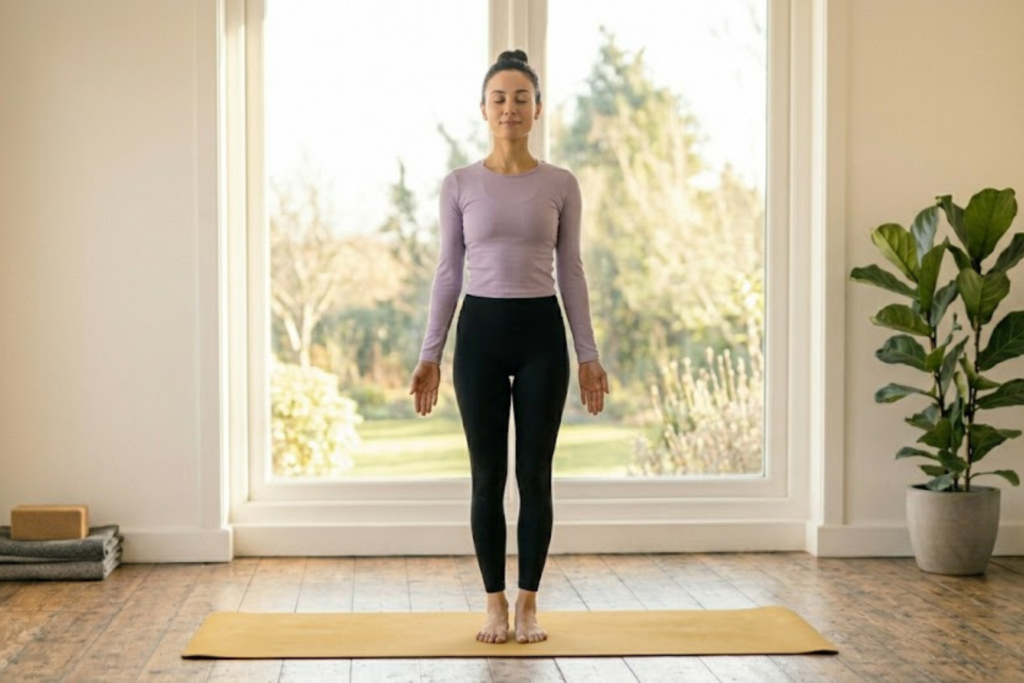
Why it works in the morning: Don’t let the simplicity fool you — Mountain Pose resets your posture after sleeping in positions that often compress and twist the body.
How to do it:
- Stand with feet together or hip-width apart, arms at your sides.
- Press all four corners of your feet into the floor.
- Lift through the crown of your head, roll your shoulders back and down.
- Inhale and feel yourself grow taller, exhale and feel rooted and steady.
Hold for: 5 breaths Beginner tip: Close your eyes here. It turns a simple standing pose into a grounding moment.
Sun Salutation Half Flow (Surya Namaskar A — Simplified)
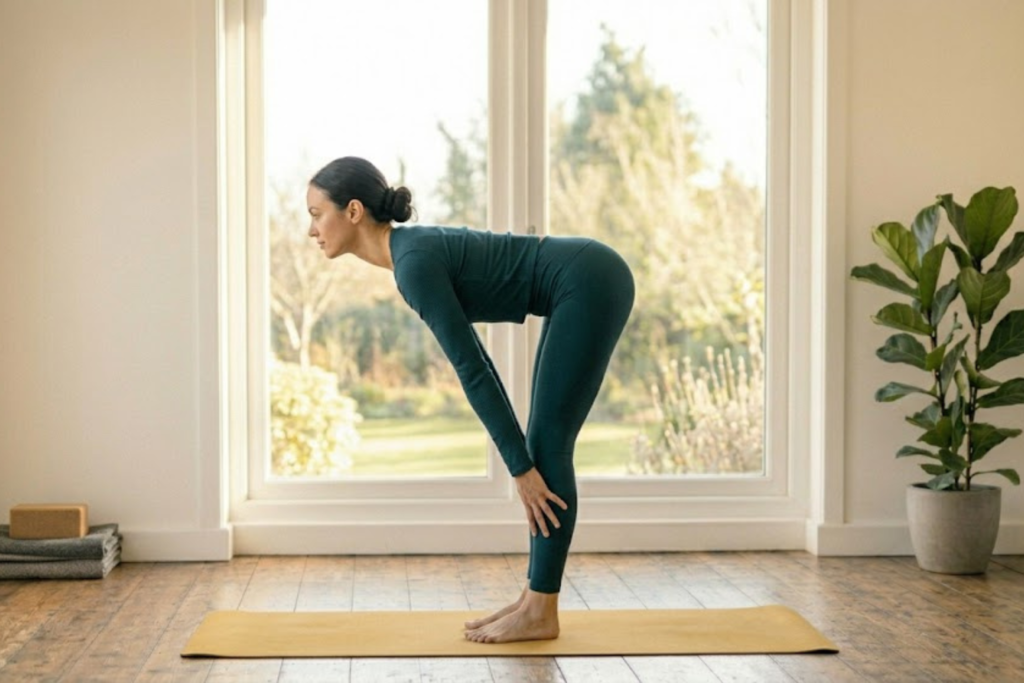
Why it works in the morning: Even a simplified Sun Salutation links breath to movement across the whole body — it’s the closest yoga gets to a natural “system reboot.”
How to do it:
- From Mountain Pose, inhale and sweep your arms overhead.
- Exhale and fold forward into Standing Forward Fold.
- Inhale to a halfway lift — flat back, hands on shins.
- Exhale, step back to plank, lower to the floor, and inhale into a gentle backbend (Cobra), then exhale back to Downward Dog.
Hold for: 3–4 full rounds Beginner tip: Skip the jump and just step — your body will thank you first thing in the morning.
Warrior I (Virabhadrasana I)
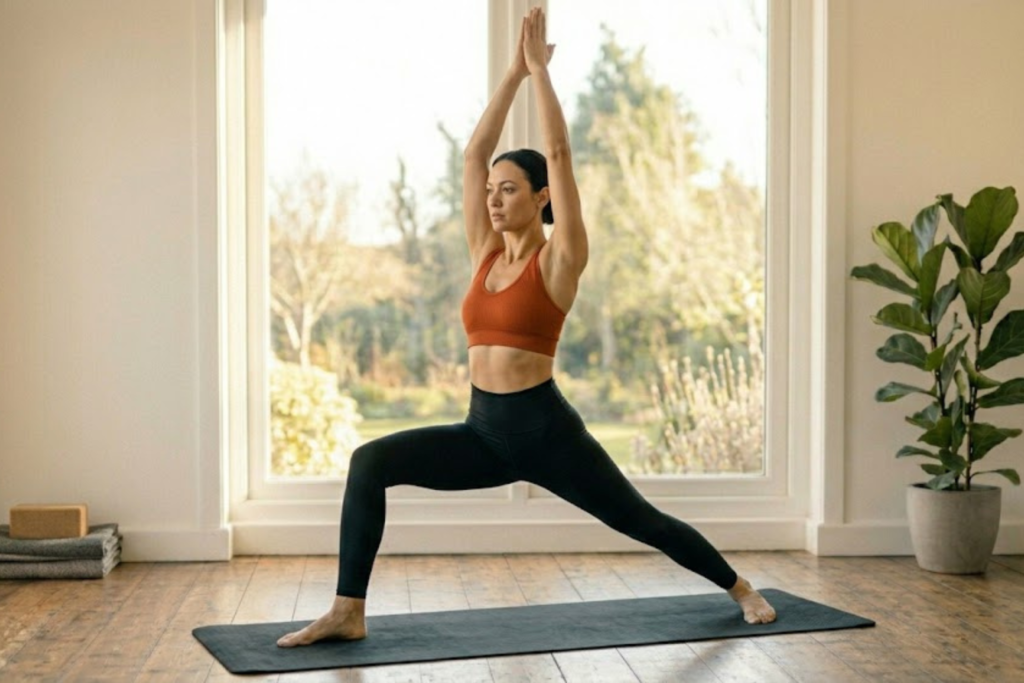
Why it works in the morning: Warrior I builds heat and focus simultaneously — it’s the pose that makes you feel strong and ready to take on the day.
How to do it:
- From a standing position, step your left foot back about 3–4 feet.
- Turn your back foot out to roughly 45 degrees and bend your front knee over the ankle.
- Square your hips toward the front of your mat as best you can.
- Inhale and lift your arms overhead, exhale and sink a little deeper into the lunge.
Hold for: 5 breaths each side Beginner tip: Your back foot doesn’t need to be perfectly placed — focus on feeling stable before going deeper.
Tree Pose (Vrksasana)
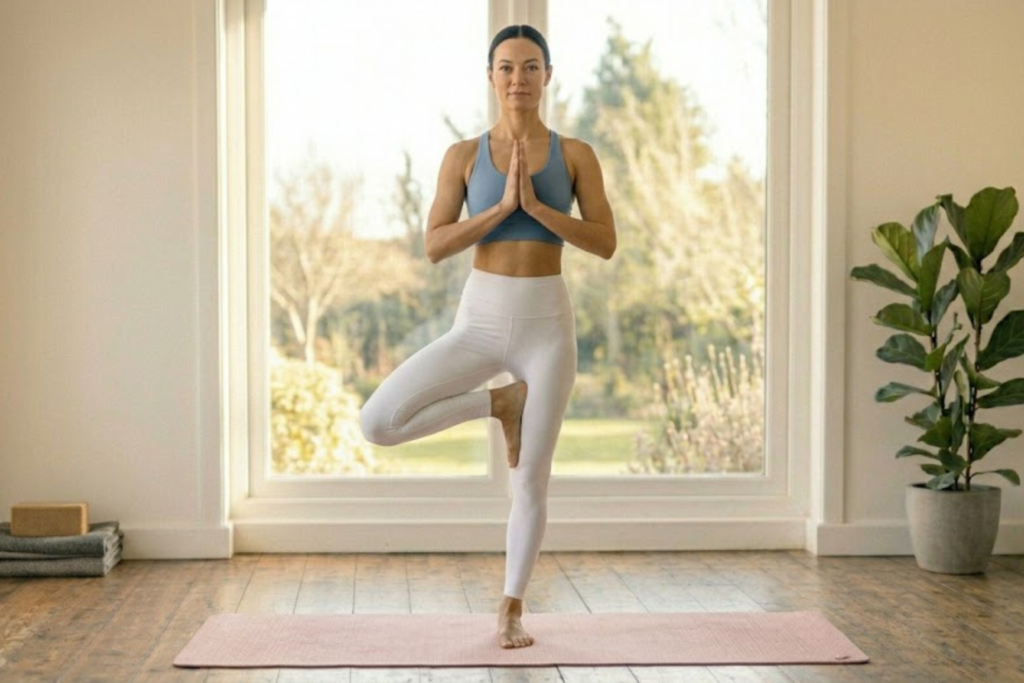
Why it works in the morning: Balance poses require total present-moment focus — which makes Tree Pose a surprisingly effective way to clear mental fog.
How to do it:
- Stand in Mountain Pose and shift your weight onto your left foot.
- Place your right foot on your inner left calf or inner thigh (avoid the knee).
- Bring your hands to your heart center or extend them overhead.
- Fix your gaze on one still point, inhale to grow tall, exhale to stay steady.
Hold for: 5–8 breaths each side Beginner tip: If you’re wobbly, keep your toes on the floor with just your heel resting on your ankle — balance improves with daily practice.
Seated Spinal Twist (Ardha Matsyendrasana)
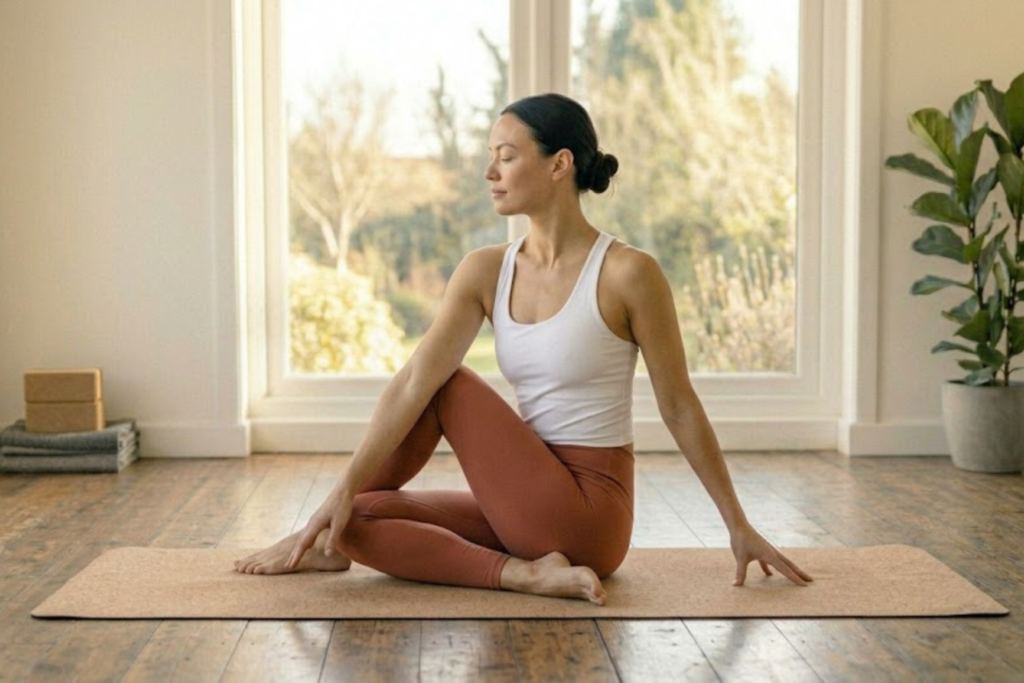
Why it works in the morning: This twist massages the digestive organs and wrings out any lingering tension in the spine — a perfect finish to your morning flow.
How to do it:
- Sit on your mat with both legs extended. Bend your right knee and cross it over your left leg, foot flat on the floor.
- Place your right hand on the mat behind you for support.
- Inhale to sit up tall, then exhale and twist your torso to the right, left elbow pressing against your right knee.
- Hold the twist on each exhale, lengthening on each inhale.
Hold for: 5 breaths each side Beginner tip: The twist starts in your lower belly — don’t just crank your neck. Work from the base up.
Also Read: How to Meditate for Beginners
Your Quick 15-Minute Morning Sequence
You don’t need 60 minutes — 15 minutes of these good morning yoga poses is enough to transform how you feel. Here’s how to string them together:
- Child’s Pose — 1 min
- Cat-Cow Stretch — 1 min
- Downward-Facing Dog — 1 min
- Low Lunge (both sides) — 2 min
- Standing Forward Fold — 1 min
- Mountain Pose — 1 min
- Sun Salutation Half Flow — 3 min
- Warrior I (both sides) — 2 min
- Tree Pose (both sides) — 2 min
- Seated Spinal Twist (both sides) — 1 min
That’s it. Set a timer, roll out your mat, and go.
Conclusion
Starting your morning with even a short yoga practice is one of the simplest investments you can make in how your day feels. These best morning yoga poses work whether you’ve been doing yoga for years or you’re stepping on the mat for the very first time. The stiffness fades, the brain fog lifts, and you actually feel ready — not just awake.
Love this routine? Check out our [30-Day Yoga Challenge for Beginners] next → and build on what you started here. Want a free printable version of this morning yoga sequence?
Frequently Asked Questions
Q1: What are the best yoga poses for morning beginners?
If you’re just getting started, stick to three poses first: Child’s Pose, Cat-Cow, and Mountain Pose. These three require no prior flexibility, carry very low injury risk, and cover the essentials — spinal release, mobility, and grounding. Once these feel comfortable, add one or two more poses each week until you’re flowing through the full routine.
Q2: How long should I do morning yoga?
For most people, 10–20 minutes is the sweet spot — long enough to feel a real difference, short enough to actually do it every day. And honestly, even 5 minutes of yoga poses for the morning beats skipping it entirely. A short consistent practice will always outperform a perfect practice you only do twice a week.
Q3: Is it better to do yoga before or after breakfast?
Most yoga teachers recommend practicing on an empty stomach — your body can move more freely and twists feel more effective before a meal. That said, if you tend to get dizzy or lightheaded when you haven’t eaten, have something light like half a banana about 20 minutes before you start. Listen to your body on this one.
Q4: What is the best yoga good morning pose to do first?
Child’s Pose is the ideal opener. It’s entirely passive, there’s zero risk of strain, and it immediately tells your nervous system it’s safe to relax. Many of my students say those first few breaths in Child’s Pose are the most calming moment of their entire day. Start there — every single time.
Q5: Can morning yoga replace exercise?
It depends on the style and intensity. A vigorous flow — think Sun Salutations at a brisk pace with Warrior sequences — can absolutely count as a full workout and raise your heart rate meaningfully. A gentle, restorative morning stretch is better thought of as a complement to other exercise. Both have real value; they just serve different purposes.


