
 Blog
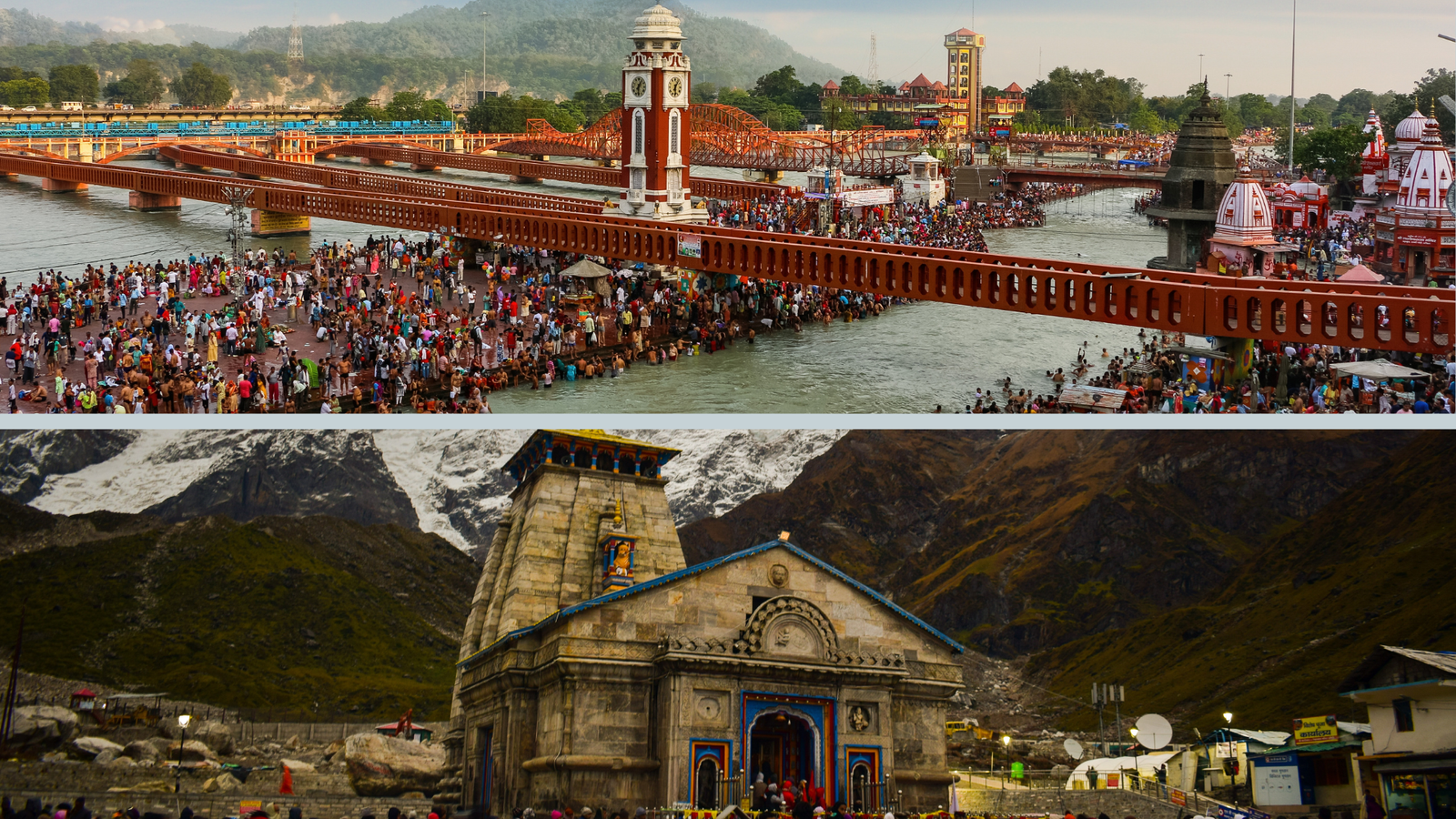
BlogKedarnath is one of the twelve Jyotirlingas of Lord Shiva and the highest among the Char Dham pilgrimage sites. It sits in the Rudraprayag district of Uttarakhand, flanked by the Kedarnath Wildlife Sanctuary on three sides and the Chorabari Glacier directly behind the temple. The structure itself is estimated to be over 1,000 years old, built in the Kathkuni style using interlocked stone without mortar, and it survived the catastrophic 2013 floods because a massive boulder — which locals call the Bheem Shila — lodged itself directly behind the temple and diverted the flood debris.
At 4:00 AM, when the Abhishek Puja begins and the temple bells ring in the darkness with snow still on the ground outside, you understand that this place exists at a frequency most people never access. That is not mysticism. That is elevation, cold air, darkness, and the accumulated faith of millions — a combination that registers somewhere below the rational mind.
Haridwar to Kedarnath: Understanding the Full Route
The distance from Haridwar to Kedarnath by road is approximately 247 km to the base camp at Gaurikund. This is not a quick drive — the haridwar to kedarnath distance by car typically takes 8 to 10 hours depending on traffic, road conditions in the hills, and seasonal delays. The route from Haridwar to Kedarnath by road passes through Rishikesh, Devprayag, Srinagar (Uttarakhand), Rudraprayag, Tilwara, Agastmuni, Ukhimath, and Kund before reaching Sonprayag and then Gaurikund.
Haridwar to Kedarnath road map overview:
- Haridwar → Rishikesh: 24 km (45 minutes)
- Rishikesh → Devprayag: 70 km (2 hours)
- Devprayag → Rudraprayag: 70 km (2 hours)
- Rudraprayag → Sonprayag: 75 km (2.5 hours)
- Sonprayag → Gaurikund: 5 km (shuttle bus, private vehicles not permitted beyond Sonprayag)
- Gaurikund → Kedarnath Temple: 16 km trek (6–8 hours on foot)
The total haridwar to kedarnath distance including the trek is approximately 263 km from Haridwar to the temple steps. The kedarnath to haridwar distance is the same in reverse, naturally — but the downhill trek on the return feels like a completely different mountain.
Getting from Haridwar to Gaurikund
Haridwar to Gaurikund By Road (The Most Common Route)
The haridwar to kedarnath by road journey is the preferred route for most pilgrims and trekkers. From Haridwar bus stand (Haridwar ISBT), state-run UPSRTC and Uttarakhand Transport Corporation buses operate services toward Sonprayag during the Yatra season. The haridwar to kedarnath bus option is economical — expect to pay ₹400–₹700 for a state bus to Sonprayag, though journey times are longer (often 10–12 hours due to stops).
For haridwar to kedarnath taxi fare, a private cab from Haridwar to Sonprayag (from where you take a shared jeep or shuttle to Gaurikund) typically costs ₹3,500–₹5,500 for a sedan and ₹4,500–₹7,000 for an SUV. Sharing a taxi with three other pilgrims significantly reduces the per-person cost.
Private vehicles are not permitted beyond Sonprayag toward Gaurikund. All pilgrims must take government-authorized shuttles or shared jeeps for the final 5km stretch.
Haridwar to Gaurikund By Train + Road
There is no direct train to Kedarnath — the Haridwar to kedarnath distance by train question needs clarification. The nearest railway stations are Haridwar (HW) and Rishikesh (RKSH). Rishikesh is about 24 km closer to the mountains and is often used as the starting point for road travel up the valley. From Rishikesh, shared jeeps and buses depart from the Rishikesh jeep stand directly to Sonprayag during the Yatra season. If you are arriving from Delhi or other cities by train, Haridwar is the better-connected junction (it’s on the main Delhi-Dehradun route). From there, take a bus or taxi up the hill road.
Haridwar to kedarnath By Helicopter (IRCTC HeliYatra)
The Kedarnath helicopter booking system underwent a significant overhaul in recent years and now operates through the IRCTC HeliYatra portal. Critical rule for 2026: you cannot book a helicopter seat without first completing your Tourist Registration (see Part 3 below). Your registration number is required during the IRCTC booking process. Helicopter services operate from helipads at Phata, Sersi, Guptkashi, and Sitapur to the Kedarnath helipad. The one-way fare is approximately ₹4,000–₹5,500 depending on the helipad. Slots fill within hours of opening — set reminders and book the moment registrations go live.
A weather caveat that the helicopter operators will not say loudly: flights are frequently cancelled due to cloud cover and high winds. If you have scheduled only one day at Kedarnath and are relying on a helicopter, you risk missing the darshan entirely. Build buffer days into your itinerary.
The 2026 Registration Rules — Read This Before Anything Else
Why Registration Exists
The 2013 cloudburst and subsequent floods killed over 5,000 people in the Kedarnath valley. Many were unregistered pilgrims with no record of their presence in the mountains. Since then, the Uttarakhand government has implemented a mandatory registration system that allows authorities to track pilgrims, enforce safe daily entry limits at the temple, and coordinate emergency response when — not if — the weather turns severe. In the peak weeks of May and June, over 10,000 people attempt the trek daily. Without a cap and a tracking system, the trail becomes a casualty waiting to happen.
How to Register for Kedarnath Yatra 2026 (Step-by-Step)
Official portal: registrationandtouristcare.uk.gov.in
Registration is completely free. If anyone — an agent, a travel operator, a hotel owner — asks you to pay for registration, they are running a scam. Here is the actual process:
- Visit the official Tourist Care Uttarakhand portal.
- Create an account using your mobile number (OTP-verified).
- Fill in your personal details, including a valid government ID number.
- Select Kedarnath as your destination and choose your intended trekking date.
- Upload a recent passport-size photograph.
- Download your QR-code registration slip.
This QR code must be presented at multiple checkpoints along the route — at Sonprayag, at Gaurikund, and at the trail entry gate. Without it, you will not be permitted to begin the trek, regardless of how far you have traveled. Print a hard copy. Do not rely solely on your phone screen in an area with unreliable mobile signals.
The Agent Scam Warning
During peak season, touts operate at Haridwar, Rishikesh, Rudraprayag, and Sonprayag offering “registration assistance” for fees ranging from ₹200 to ₹2,000. They claim the online portal is “closed” or “too complicated.” The portal is neither. These agents either register you using their own pooled slots (which can result in your registration being invalid) or take your money for a service that is free and takes ten minutes on a smartphone. Register yourself, directly, on the official portal.
The 2026 Yatra Season Dates and Best Time to Visit
When the Doors Open
For Kedarnath Yatra 2026, the Kapat (sacred doors) of the temple will open on April 22, 2026, on the occasion of Akshaya Tritiya. The temple closes for winter in late October or early November (the exact date follows the Hindu calendar and is announced annually). The 2025 closing was on November 2 — expect the 2026 closing to fall in the same general window.
Best Time to Visit Kedarnath
May and early June offer the most stable trekking conditions. The snow from winter has cleared from the trail, temperatures are cold but manageable (0°C to 12°C at the temple), and visibility is generally good. This is also the busiest period — expect crowds on the trail and advance book everything.
Late June to mid-July brings the monsoon. The trek remains open, but landslides are common on the Haridwar-to-Gaurikund highway, and cloud cover can persist for days, limiting visibility and helicopter operations. Experienced pilgrims with high risk tolerance sometimes prefer this period for the dramatically reduced crowds.
Mid-September to late October is arguably the most rewarding window for those who want solitude. The monsoon has passed, the skies are clear and brilliant, the surrounding peaks are dusted with early snow, and the trail is nearly empty compared to May. The temperatures at night drop below freezing at this point — be prepared.
Kedarnath weather at the temple itself is unpredictable at any time of year. Even in May, sudden snowfall is possible. Even in October, the afternoon sun can be warm. The principle is simple: prepare for cold, be grateful for warmth, and never assume the mountain has decided to cooperate.
The 16km Trek from Gaurikund — A Realistic Account
What the Gaurikund to Kedarnath Distance Actually Means
The Gaurikund to Kedarnath distance is 16 kilometres one way — 32 kilometres round trip if you are walking both ways. The elevation gain is approximately 1,400 metres, starting at Gaurikund (1,982m) and ending at the temple (3,583m). These are not numbers on paper. At 3,583 metres, the available oxygen is roughly 60% of what your body processes at sea level. Your heart rate will be elevated even while standing still. Your appetite will decrease. Your sleep will be fragmented. These are not signs of weakness — they are altitude physiology, and they affect everyone to varying degrees.
Most fit adults who are acclimatized can complete the upward trek in 6 to 8 hours. Fit trekkers move faster. Elderly pilgrims, those with health conditions, and those who underestimated the terrain sometimes take 10 to 12 hours. There is no shame in any of this. The trail has its own pace.
The Trail, Segment by Segment
Gaurikund to Jungle Chatti (4km): This is the sharpest ascent of the entire route. The path is paved (a mix of stone steps and concrete), relatively narrow, and passes through dense forest before opening out. Your lungs will protest here. Go slow, even if you feel strong. The people who exhaust themselves in the first 4km are the ones who struggle to finish.
Jungle Chatti to Bheembali (6km): The trail widens and the gradient eases slightly. This is where the mountain opens up and you get the first unobstructed views of the surrounding peaks. There are small dhabas (tea stalls) at intervals. Eat something warm if you can — the cold saps calories quickly. The Mandakini river is visible below in the gorge, running an almost unnatural shade of grey-green with glacial melt.
Bheembali to Lincholi (2km): A relatively flat section that acts as psychological relief. Use it to regulate your breathing, take water, and check your body honestly. If you have a persistent headache, dizziness, or nausea that isn’t clearing, this is the point to consider whether ascending further is safe.
Lincholi to Kedarnath (4km): The final section crosses open, rocky terrain above the treeline. The vegetation becomes sparse, then vanishes. Wind picks up. The Kedar Dome comes into full view. The trail is marked with stone cairns and the occasional bamboo pole. On busy days, a near-continuous stream of pilgrims makes the path obvious. On quieter days, especially in shoulder season, pay attention to the markers.
The Pony and Palanquin Option
Ponies (horses) and palanquins (dolis/kandis) are available for hire at Gaurikund for those who cannot trek. The pony fare in 2025 was approximately ₹2,500–₹3,500 one way; expect similar pricing in 2026. Book early in the morning — supply is finite during peak season. Note that ponies cannot carry passengers with a body weight above approximately 80kg, and the operators make this judgment on the ground.
Acclimatization: The Step Most People Skip
If you are flying into Delhi or taking an overnight train from a lowland city and planning to reach Gaurikund the next day, you are moving too fast. Altitude sickness (Acute Mountain Sickness, or AMS) does not announce itself gradually. It can shift from mild headache to severe within hours.
The recommended approach for 2026: spend at least one night in Guptkashi (1,319m) or Phata (1,800m) before attempting the trek. Even better, spend two nights. Use that time to walk at lower elevation, eat light, stay hydrated, and sleep. This is not luxury — it is logistics. Pilgrims who acclimatize properly have a categorically better experience on the trail.
Beyond the Main Temple — What Most Pilgrims Miss
Bhairavnath Temple
Located approximately 500 metres north-east of the Kedarnath temple, the Bhairavnath Temple sits on a ridge overlooking the entire valley. Bhairav is considered the guardian of Kedarnath — Hindu tradition holds that while Shiva “sleeps” through winter, Bhairav watches over the valley. The Kapat closing ceremony at Kedarnath is not complete until a brief puja is performed at the Bhairavnath shrine. The walk to the temple is short but steep, and the view from the ridge — with the Kedarnath temple below you and the glacier behind it — is worth the effort independently of any religious significance.
The Rudra Meditation Cave
About 1 kilometre from the main temple, carved into the mountainside above the valley, is the Rudra Meditation Cave — a set of individual meditation cells managed by the Garhwal Mandal Vikas Nigam (GMVN). These cells gained significant attention in 2019 when Prime Minister Narendra Modi spent a night in meditation there before the 2019 general election results. They are available for booking through GMVN (gmvnl.in) and are intended for genuine meditation retreats. A single session requires advance booking and cannot be arranged on arrival. If you are planning a multi-day stay at Kedarnath and are drawn to extended practice at altitude, this is one of the more unusual things you can do in the Himalayas.
The Packing List — No Vague Advice
Most packing lists for Kedarnath suggest “warm clothes” and “good shoes.” This is not useful. Here is what the trail actually demands.
Footwear and Lower Body
- Trekking shoes that have been worn before — at least 50–80km on them before the Yatra. New shoes on a 16km mountain trek cause blisters that can end your pilgrimage before the midpoint.
- Wool or synthetic trekking socks (two pairs minimum, one kept dry as backup)
- Trekking poles — dramatically reduce knee stress on the descent; available for hire at Gaurikund but quality varies
Upper Body Layering System
- Moisture-wicking base layer (synthetic, not cotton — cotton kills warmth when wet)
- Mid-layer fleece (250-weight or equivalent)
- Hardshell or waterproof-breathable outer layer (not a regular rain poncho — they catch wind and become dangerous in gusts)
- Down jacket for the temple area and early mornings (packable type preferred)
Head, Face, and Hands
- UV-blocking sunglasses (not fashion sunglasses — glacier reflection at this altitude causes snow blindness; look for UV400 rating)
- Wool or fleece beanie (a significant amount of heat is lost through the head)
- Balaclava or neck gaiter for wind
- Liner gloves + waterproof outer mittens or gloves
Health and Safety
- Personal first aid kit including moleskin for blisters, ibuprofen, and electrolyte sachets
- Diamox (acetazolamide) — consult a physician before the trek if you have a history of altitude issues; do not self-medicate without medical advice
- Pulse oximeter — a small, inexpensive device that reads blood oxygen saturation; if your SpO2 drops below 85% and does not recover with rest, descend
- Sunscreen SPF 50+ and lip balm with SPF (the UV index at 3,583m is significantly higher than at sea level)
- Water bottle and water purification tablets (multiple springs on the trail but treat all water)
Documents and Logistics
- Kedarnath registration slip — printed hard copy, plus digital backup
- Government-issued ID (Aadhaar, passport, or driving licence)
- Cash — ATM access is limited beyond Sonprayag; carry sufficient cash for the entire trail portion of your trip
- Emergency contact card in a visible pocket
A Practical 5-Day Itinerary from Haridwar
Day 1 — Haridwar to Guptkashi (approx. 220km, 8–9 hours by road) Depart Haridwar early morning. The haridwar to kedarnath route map via road passes through Rishikesh, Devprayag, and Rudraprayag before reaching Guptkashi. Spend the night in Guptkashi (1,319m). The Vishwanath temple in Guptkashi is worth a visit.
Day 2 — Guptkashi (Acclimatization + Rest) Do not rush this day. Walk around Guptkashi at a gentle pace, eat well, and sleep early. Your body is adjusting. Guptkashi is also the last reliable point for hot food, hot showers, and a comfortable bed before the trek.
Day 3 — Guptkashi to Gaurikund to Kedarnath Drive or take a shared jeep from Guptkashi to Sonprayag, then shuttle to Gaurikund. Begin the 16km trek by 5:00–6:00 AM to ensure you reach Kedarnath before afternoon. Afternoon clouds and rain are common and can be disorienting on the upper trail. Register your biometrics at the Gaurikund checkpoint. Arrive at Kedarnath by mid-afternoon. Rest.
Day 4 — Kedarnath Darshan Attend the 4:00 AM Abhishek Puja if your body has acclimatized adequately (early morning cold at this altitude is serious — dress for it fully). Visit Bhairavnath Temple. Rest. If your GMVN cave session is booked, this is the day. Spend the evening in the shadow of the glacier in silence, if you can find it.
Day 5 — Kedarnath to Gaurikund Trek + Return to Haridwar Begin descent by 7:00 AM. The 16km downhill takes 4–5 hours for most walkers. Reach Gaurikund by noon, Sonprayag by early afternoon, and drive back toward Haridwar or Rishikesh. The haridwar to kedarnath distance in reverse becomes a mental unspooling as the road descends — the mountain retreats, the air thickens, and the world that had briefly receded comes back.
The Final Word Before You Book
The Kedarnath Yatra is not an adventure sport and it is not a wellness retreat. It is a demanding physical journey to a place that has absorbed millions of acts of faith over centuries, at an altitude that does not forgive carelessness. The people who return from the change are usually the ones who prepared seriously, moved through it attentively, and allowed the mountain to be what it is rather than what they expected.
For 2026, the Kedarnath Kapat opened on April 22. Registration is free, mandatory, and available at registrationandtouristcare.uk.gov.in. Book your accommodation in Guptkashi or Phata at least six to eight weeks before your trekking date during peak season. Your helicopter registration number from the tourist portal is required before IRCTC HeliYatra booking.
Ready to Plan Your 2026 Kedarnath Yatra?
Kedarnath Tourism Provides — a practical guide to reading mountain weather, understanding altitude warning signs, and knowing when to turn around. It includes a daily weather pattern summary for the April-October season and a medical checklist to review with your physician before departure.
Or, if you want a fully planned itinerary including accommodation, transport bookings, and a certified mountain guide for the trek: contact our Yatra planning team for a customized 2026 Char Dham package that starts and ends in Haridwar.
Frequently Asked Questions: Haridwar to Kedarnath
Which is the best way to go to Kedarnath?
For most pilgrims, the best way is the combination of road + trek: take a private taxi or shared cab from Haridwar to Sonprayag, shuttle to Gaurikund, and trek the 16km to the temple. This gives you full control over your schedule, time to acclimatize en route, and the complete experience of arriving at the temple on foot — which carries its own significance for many pilgrims. If mobility or health is a constraint, the helicopter route via IRCTC HeliYatra (from Phata, Sersi, or Guptkashi helipads) is the next best option — but book early, build buffer days for weather cancellations, and remember that your Tourist Care Uttarakhand registration number is required before you can book a helicopter slot. Ponies and palanquins are available at Gaurikund for those who cannot trek but want to avoid flying.
How much does it cost from Haridwar to Kedarnath?
The total cost depends heavily on your travel style. Here is a realistic breakdown for a solo pilgrim in 2026:
- Haridwar to Sonprayag by shared cab/bus: ₹300–₹700
- Sonprayag to Gaurikund shuttle: ₹30–₹50
- Trek (self-guided, no pony): Free
- Basic accommodation in Guptkashi (recommended acclimatization night): ₹800–₹2,500
- Accommodation at Kedarnath (GMVN or private lodges): ₹1,000–₹3,000 per night
- Food on the trail and at the temple: ₹300–₹600 per day
- Registration: Free (official portal only)
A bare-minimum self-guided Yatra from Haridwar and back, including one night in Guptkashi and one night at Kedarnath, costs approximately ₹4,000–₹7,000 per person. A private taxi from Haridwar, decent accommodation, and pony hire can push this to ₹15,000–₹25,000 per person. Helicopter packages from Haridwar including transfers, accommodation, and a return flight cost ₹20,000–₹40,000 depending on the operator.
Is a bus available from Haridwar to Kedarnath?
Yes — but with an important clarification. No bus goes all the way to Kedarnath itself (the last 16km is a trek with no motorable road). Buses from Haridwar ISBT run to Sonprayag, the last point before the road-accessible base. Uttarakhand Transport Corporation (UTC) and some private operators run services during the Yatra season (approximately April to November). From Sonprayag, government-authorized shuttles run the final 5km to Gaurikund, from where the trek begins. The haridwar to kedarnath bus journey to Sonprayag takes roughly 10–12 hours and costs ₹350–₹650 depending on the service category.
How much is a taxi ticket from Rishikesh to Kedarnath?
A private cab from Rishikesh to Sonprayag (the road terminus) costs approximately ₹3,000–₹4,500 for a sedan and ₹4,000–₹6,500 for an SUV or Innova during the 2026 season. Prices vary by season (peak May–June rates are higher), negotiation, and whether you book through a hotel, a roadside operator, or an app. Shared taxis from Rishikesh jeep stand to Sonprayag charge ₹400–₹700 per seat and are a practical option for solo travelers. Note that Rishikesh is about 24km further from the mountains than the journey from Haridwar starts — the actual driving time from Rishikesh to Sonprayag is 7–9 hours.
Can I get a sleeper bus from Haridwar to Sonprayag?
As of the 2025 season, dedicated sleeper bus services between Haridwar and Sonprayag are not reliably available on this route. The mountain roads — especially beyond Rudraprayag — involve hairpin bends, narrow stretches, and gradient changes that make large sleeper coaches impractical. Most overnight options are semi-sleeper or regular AC/non-AC buses that operate on partial sections of the route (such as Haridwar to Rudraprayag or Haridwar to Srinagar, Uttarakhand). For the full haridwar to sonprayag journey, the common practical choices are: a daytime state bus (departing early morning from Haridwar ISBT), a shared jeep, or a private taxi. If you want to travel overnight to maximize time, the most workable approach is a private cab that you book yourself and can stop at Rudraprayag or Guptkashi mid-journey for rest.
How to go to Kedarnath via Haridwar? (Step-by-Step)
Here is the complete sequence:
- Register online at registrationandtouristcare.uk.gov.in — free, mandatory, takes 10 minutes. Download your QR-code slip and print it.
- Reach Haridwar by train, bus, or car from your origin city. Haridwar is well-connected to Delhi (overnight trains) and other major cities.
- Haridwar to Sonprayag — take a state bus (₹400–₹650) or private taxi (₹3,500–₹5,500). Depart by 5:00–6:00 AM for best road conditions. Journey: 8–10 hours.
- Overnight in Guptkashi or Phata — strongly recommended for acclimatization before the trek. Do not skip this.
- Next morning: Sonprayag to Gaurikund — government shuttle (₹30–₹50, 5km).
- Gaurikund to Kedarnath — 16km trek on a marked trail. Allow 6–8 hours. Show your QR-code registration at the trail checkpoint.
- Darshan at Kedarnath temple (3,583m / 11,755 feet). The Kapat open on April 22, 2026.
Return: Trek back to Gaurikund, shuttle to Sonprayag, road journey back to Haridwar.


Comments are closed