
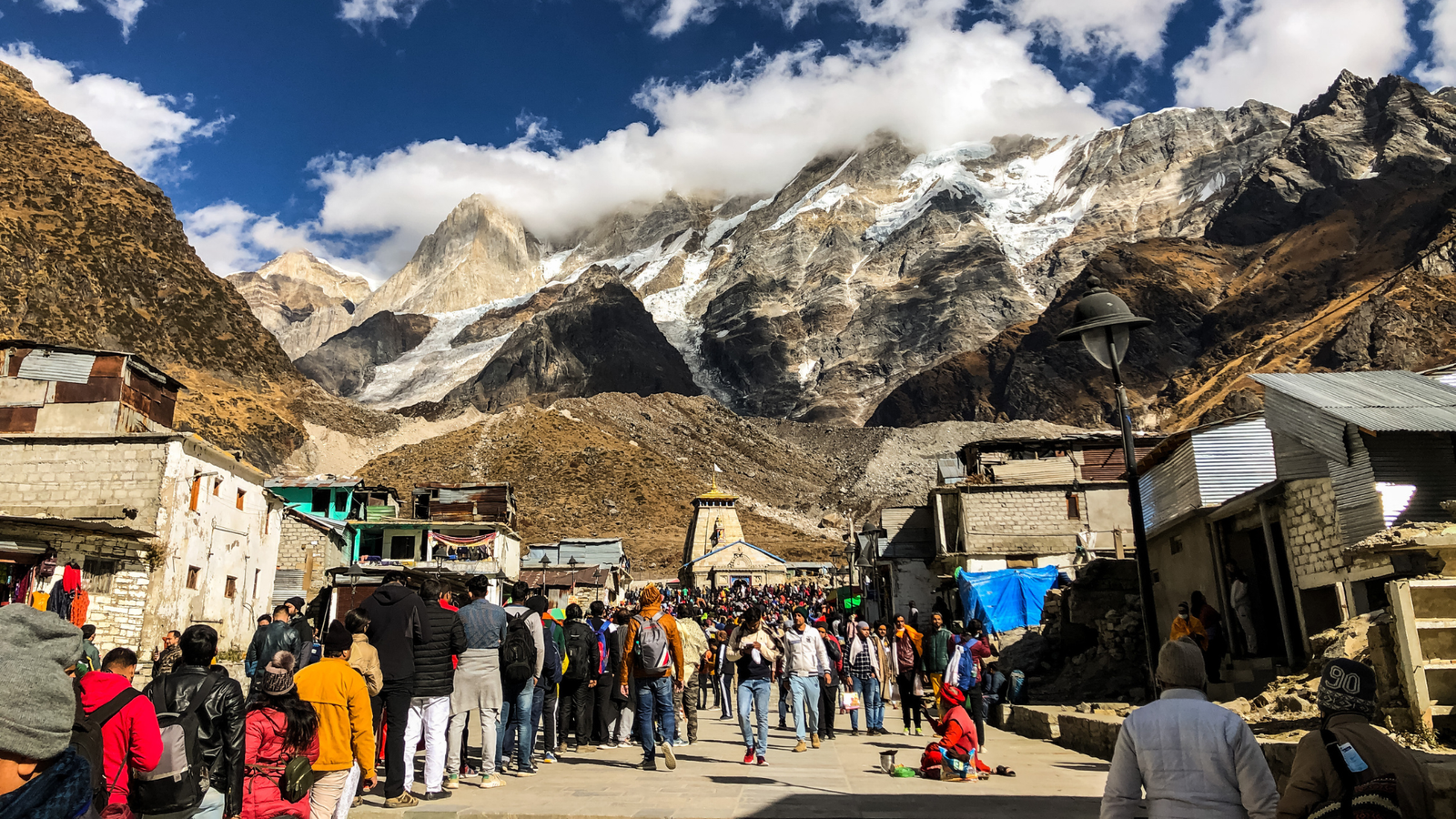
 Blog
BlogThe pilgrimage to Kedarnath Dham is a journey of profound faith, a spiritual calling that draws millions to the heart of the majestic Garhwal Himalayas. It is a path that tests endurance and rewards the soul. However, this sacred journey is intrinsically linked to the raw, untamed power of the mountains, and nowhere is this more apparent than in the condition of the roads that lead to it.
For any pilgrim planning this journey, especially during the volatile monsoon season, one question eclipses all others: “Is the road to Kedarnath open?”
This is not just a query about convenience; it is a question of safety, planning, and peace of mind. You are in the right place. Think of this page as your trusted digital co-pilot for the road to Kedarnath. Here, we provide the most current status updates, a deep dive into the route’s challenges, insights into the weather’s impact, and links to official sources, all designed to help you make safe and informed travel decisions.
At-a-Glance: Kedarnath Road Status
This is the most current information we have. Always verify with official sources before starting your journey.
KEDARNATH ROAD STATUS Last Updated: Tuesday, September 2, 2025 – 10:55 AM IST
Current Status: YATRA TEMPORARILY SUSPENDED
Summary: The Kedarnath Yatra has been temporarily suspended with immediate effect due to a significant landslide at Munkatiya, near Sonprayag. The landslide was triggered by a fresh spell of heavy, localized rain overnight, completely blocking the main highway (NH-107). Authorities have announced that the Yatra will remain closed until at least September 5, 2025, to allow for debris clearance and road safety assessments. All pilgrims are advised to halt their journey and not proceed beyond Rudraprayag or Guptkashi until further notice.
Latest News & Updates (Reverse Chronological Order)
September 2, 2025 (Morning): BREAKING: A major landslide at Munkatiya near Sonprayag has completely blocked NH-107. The Rudraprayag District Administration has officially suspended the Kedarnath Yatra until September 5th. SDRF and BRO teams have been dispatched for rescue and clearance operations.
September 1, 2025: Weather conditions had improved throughout the day, and authorities were preparing to ease previous travel restrictions. The flow of pilgrims was steady, with no major incidents reported.
August 30 – 31, 2025: The weekend saw a steady flow of pilgrims under the timed traffic plan with no major disruptions. BRO completed key stabilization work near the Sirobgad slide zone.
August 29, 2025: Regulated, timed traffic continued along the route. Weather remained mostly clear, allowing for the smooth passage of vehicles during the permitted hours and aiding in road repair efforts.
August 28, 2025: The regulated, timed traffic plan was in effect. Early morning hours had seen a smooth, although slow, flow of Yatra vehicles. Authorities continued to monitor the weather and fragile hillsides closely.
A Deep Dive: Understanding the Route to Kedarnath (NH-107)
The journey by road is an integral part of the Kedarnath pilgrimage. The primary route is a single artery, National Highway 107 (NH-107), that snakes its way up from the plains. Understanding its segments is key to appreciating the journey’s challenges.
Phase 1: The Plains to the Foothills (Rishikesh to Rudraprayag)
-
Route: Rishikesh → Devprayag → Srinagar → Rudraprayag
-
Condition: This initial 140km stretch is the most stable part of the journey. Thanks to the Char Dham All-Weather Road project, the road is wider and more resilient than ever before. You will travel alongside the holy Ganga and then the Alaknanda river, passing through the sacred confluences at Devprayag (where Alaknanda and Bhagirathi meet to form the Ganga) and Rudraprayag (where Alaknanda meets Mandakini). While generally safe, heavy rains can still cause localized disruptions.
Phase 2: The Challenge Begins (Rudraprayag to Guptkashi)
-
Route: Rudraprayag → Agastmuni → Guptkashi
-
Condition: After Rudraprayag, you leave the main Badrinath highway and turn into the Mandakini valley, heading straight towards the Kedar massif. The road immediately narrows, and the mountain slopes become steeper. This is where the journey begins to feel like a true mountain adventure. The road is more susceptible to the whims of nature here, and you will notice an increased presence of BRO teams and machinery, a constant reminder of the ongoing battle between man and mountain.
Phase 3: The Vulnerable Stretch (Guptkashi to Sonprayag)
-
Route: Guptkashi → Phata → Sitapur → Sonprayag
-
Condition: This final 30km stretch is the most challenging and unpredictable part of the drive. The valley is narrow, the river Mandakini rages below, and the road is carved out of steep hillsides. This is where the majority of disruptions occur.
-
A Case Study: Sirobgad, the Notorious Slide Zone: Just before Guptkashi, you will encounter a stretch of road that has become infamous among locals and pilgrims: Sirobgad. This is a perennial landslide zone. The geological composition of the hill here is loose and fragile, making it highly prone to sliding, especially during the monsoon when the soil becomes saturated with water. Even on a clear day, you will see a constant trickle of small stones and debris on the road. During rains, this trickle can turn into a torrent, closing the road for hours or even days. The presence of multiple JCBs and excavators stationed permanently at Sirobgad tells its own story. When you approach this zone, be vigilant, follow the instructions of authorities, and do not stop.
The Final Leg: Sonprayag to Gaurikund
Private and tourist vehicles are only permitted up to Sonprayag, which has a large parking facility. From Sonprayag, you must take an official, shared shuttle jeep for the final 2km journey to Gaurikund. This system is in place to reduce congestion and pollution in the most sensitive area. Gaurikund (1,982m / 6,500 ft) is the traditional starting point of the 16-18 km trek to the Kedarnath temple.
The Profound Impact of Weather on Your Journey
The status of the Kedarnath road is almost entirely dictated by the weather. Understanding the seasonal dynamics is crucial for safe planning.
Monsoon Season (Late June to Mid-September)
This is the most dangerous time to travel. The constant rainfall saturates the soil on the steep slopes, dramatically increasing the risk of landslides.
-
Landslides & Roadblocks: As seen with Sirobgad, entire sections of the road can be washed away or buried under tons of debris.
-
Flash Floods: Small streams and waterfalls that look benign in dry weather can swell into raging torrents within minutes during a cloudburst, washing over the road and making it impassable.
-
Travel Advice: If you must travel during this period, have at least 2-3 buffer days in your itinerary. A 1-day delay is common; a 2-day delay is possible. Never attempt to drive at night. If the weather looks severe, it is always wiser to halt your journey at a safe town like Rudraprayag or Guptkashi and wait for it to clear.
Winter Season (November to April)
The temple and the entire region are closed to the public due to extreme cold and heavy snowfall. The road beyond Guptkashi is often buried under several feet of snow, making it completely inaccessible.
The Golden Windows: Pre and Post-Monsoon (May-June & Mid-Sept to Oct)
These are the best and safest times for the Yatra. The weather is stable, the skies are clear, and the roads are at their most reliable. The risk of landslides is minimal, allowing for a more predictable and less stressful journey.
Official Sources for Real-Time Verification
While this page is updated regularly, the situation in the mountains can change in minutes. Always cross-check with official sources before and during your travel.
-
Uttarakhand Police Social Media: The most reliable source for live updates. Their teams on the ground post frequent videos and text alerts about road conditions across the state.
-
Official Twitter (X) Handle: Uttarakhand Police
-
Official Facebook Page: https://www.facebook.com/uttarakhandpolice/
-
-
District Administration Helplines: Save these numbers on your phone before you start.
-
Rudraprayag District Disaster Control Room: 01364-233727
-
-
On-the-Ground Intelligence: Do not underestimate the power of local information. Talk to your taxi driver, hotel staff, and pilgrims returning from the route. They often have the most realistic picture of the road conditions ahead.
Frequently Asked Questions (FAQ)
Q1: Is the Kedarnath Yatra open now?
Yes, the Kedarnath Yatra is officially open. The pilgrimage season for 2025 began in late April/early May on the auspicious occasion of Akshaya Tritiya. The temple doors will remain open for pilgrims until the festival of Bhai Dooj, typically in late October or early November.
However, it is crucial to understand the difference between the Yatra being “officially open” and the access routes being “physically open.” Even during the official Yatra period, the pilgrimage can be temporarily halted for hours or days due to severe weather, roadblocks, or landslides, as is common during the monsoon. So, while the temple is open, your ability to reach it depends entirely on the road and trek path status.
Q2: Is the road to Kedarnath open today?
Please refer to the “At-a-Glance” status box at the very top of this article for the latest update. We monitor official channels and update this section regularly to provide the most current status.
Q3: What is the best and most common route to Kedarnath by road?
The single standard route is via National Highway 107 (NH-107). The journey starts from Rishikesh and proceeds as follows: Rishikesh → Devprayag → Srinagar → Rudraprayag → Guptkashi → Sonprayag. All private and tourist vehicles must park at Sonprayag. From there, a 2km shuttle takes you to Gaurikund, the starting point of the Kedarnath trek.
Q4: How can I get live updates on Kedarnath road landslides?
The fastest and most reliable live updates are provided by the Uttarakhand Police on their official Twitter (X) and Facebook pages. They post real-time information, often with videos from the ground, showing the status of roadblocks and clearing operations. We have provided links to these pages in the “Official Sources” section above.
Q5: Is it safe to travel to Kedarnath by road during the monsoon (July-August)?
Safety during the monsoon is a matter of preparedness, caution, and flexibility. While thousands of pilgrims do travel during this time, the risks are significantly higher than in other seasons. You must be prepared for:
-
Sudden road closures due to landslides.
-
Long waiting hours on the road.
-
The possibility of having to turn back or alter your plans.
If you choose to travel in the monsoon, having buffer days in your itinerary is not a luxury; it is a necessity. If you are a first-time visitor to the Himalayas or are traveling with elderly people or children, it is strongly advised to plan your trip during the safer pre or post-monsoon windows.
Conclusion: A Journey of Faith and Prudence
The road to Kedarnath is as much a part of the pilgrimage as the temple itself. It teaches patience, resilience, and a profound respect for the power of nature. Your faith is the driving force, but prudence must be your guide. By consistently checking the road status, respecting the weather, and building flexibility into your plans, you honor the sanctity and challenge of this incredible journey.
Navigating these variables—the unpredictable weather, the changing road conditions, and the on-the-go planning—can be a significant challenge. For pilgrims who wish to focus entirely on their spiritual experience without the logistical stress, partnering with an expert can be the ideal solution. Kedarnath Tourism specializes in crafting meticulously planned and safety-oriented Yatra packages. As a trusted local expert, our team provides the best Kedarnath tour services by handling all the complexities of mountain travel, from managing safe acclimatization schedules to adapting to real-time road conditions, ensuring your journey is as seamless and secure as possible.
Whether you travel independently or with a guide, our ultimate wish is the same. May your journey to the abode of Lord Shiva be spiritually fulfilling, memorable, and above all, safe.
We wish you a blessed darshan.


