
 Blog
BlogWhich month is best to visit Kedarnath depends on what you’re looking for — but May and September are the two safest bets for most travellers. The Kedarnath temple opens on 22 April 2026 and closes on Bhaidooj (usually late October). For clear skies, manageable crowds, and an unforgettable darshan, early May or the September–October window wins every time.
It’s a fair question — and an important one. Kedarnath isn’t the kind of trip where you just show up. Between the 16 km trek from Gaurikund, unpredictable Himalayan weather, helicopter slots that vanish in hours, and a yatra season that runs only about six months a year, timing your visit is everything.
This guide gives you a clear, honest month-by-month breakdown so you can pick the window that fits your budget, group size, and the kind of experience you’re actually after — whether that’s a peaceful darshan, a snowfall sighting, or an adventurous solo trek. Let’s sort this out properly.
Understanding Kedarnath’s Seasons at a Glance
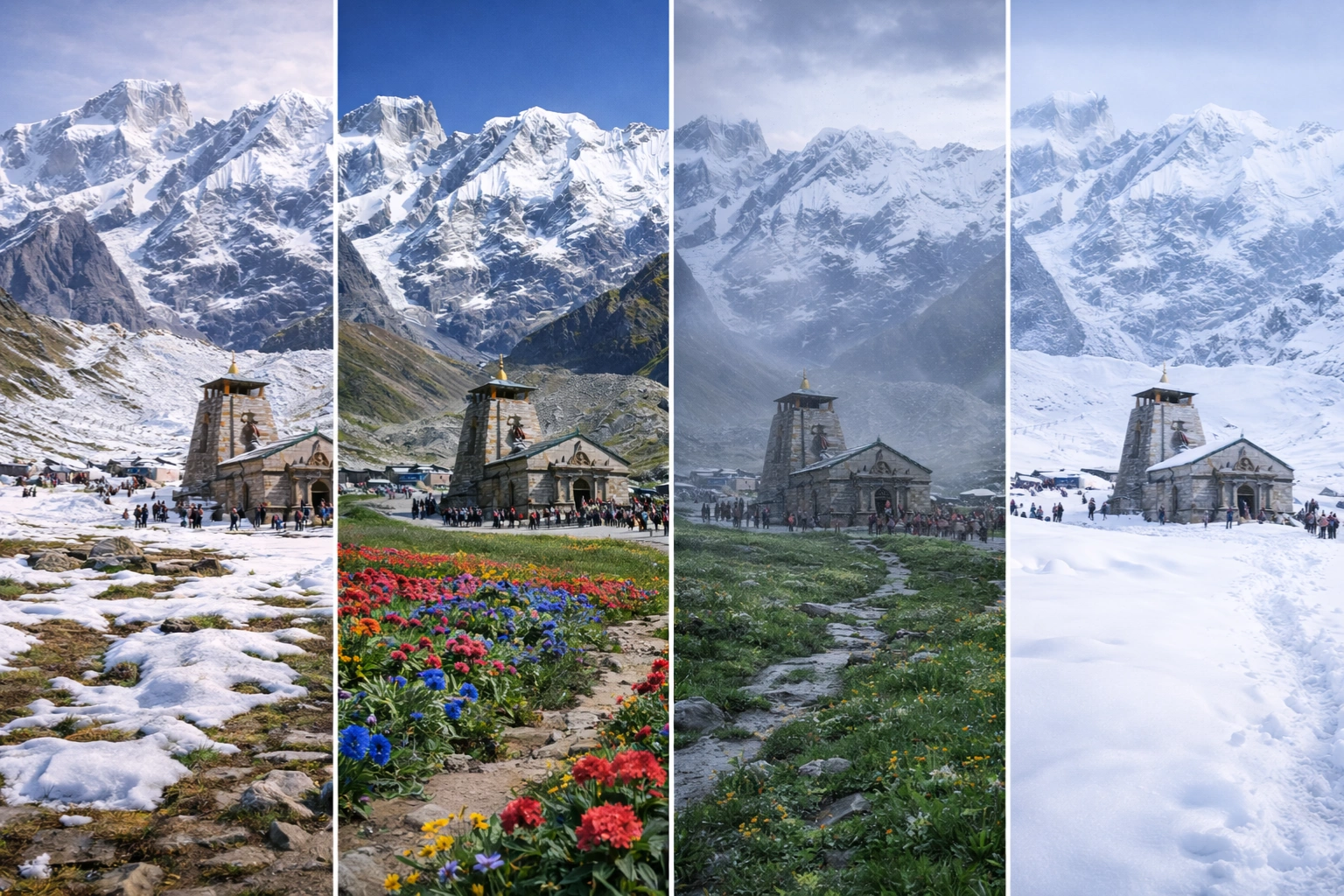
Kedarnath sits at 3,583 metres above sea level in Rudraprayag district, Uttarakhand. That altitude means the weather is dramatically different from what you’d expect in the plains. The region gets four distinct phases: the yatra opening season (May–June), monsoon (July–August), the post-monsoon golden window (September–October), and the closed off-season (November to April).
The Kedarnath temple does not stay open year-round. The 2026 yatra opens on 22 April and typically closes on Bhaidooj in late October. Outside that window, the shrine is locked, the route is buried under several feet of snow, and no civilian access is permitted. Plan your trip within this six-month window.
Month-by-Month Breakdown: When to Go and Why
May–June — Peak Yatra Season (Yatra Opens 22 April 2026)
Temperature range: 5°C to 15°C during the day; drops to near 0°C at night. Skies are mostly clear, the snow from winter is still visible on the surrounding peaks, and the entire valley looks like it belongs on a postcard.
The experience on the ground: this is the busiest period of the entire yatra calendar. Schools are on summer break, IRCTC Char Dham packages are fully booked weeks in advance, and Gaurikund will have queues you didn’t anticipate. Helicopter slots from Phata and Sirsi? They’re gone within minutes of going live on the Uttarakhand Civil Aviation website.
Who it’s best for: families with school-going children who can only travel in the summer holiday window, first-time pilgrims who want the full yatra atmosphere, and anyone doing the full Char Dham circuit.
Insider tip: Book your helicopter slots on heliyatra.uk.gov.in the moment they go live — usually 30–45 days before your travel date. Set an alarm. Seriously. Don’t wait.
July–August — Monsoon Season (Proceed With Caution)
Temperature: 8°C to 14°C, but that’s barely the concern. This is the period of heavy rainfall across Uttarakhand, and the route from Gaurikund to Kedarnath is prone to landslides, waterlogging, and sudden trail closures. The 2013 Kedarnath disaster happened in June — a reminder that the Himalayas demand deep respect during monsoon.
The experience on the ground: crowd numbers drop sharply. Accommodation is cheaper and more available. The landscape is lush and dramatic. But trail conditions are genuinely risky, and the Disaster Management Authority regularly suspends the yatra for days at a time after heavy rainfall or cloudburst events.
Who it’s best for: honestly? Very few people should plan their primary trip in July–August. If you’re an experienced Himalayan trekker with flexible dates and no specific schedule, it can work — but for families, elderly pilgrims, or first-timers, this is the window to avoid.
What is the best time to visit Kedarnath temple for darshan?
The best time to visit Kedarnath temple for darshan is May (after the yatra opens on 22 April) or September–October. These windows offer stable weather, open trekking routes, and manageable crowds. May gets the most footfall, so September is ideal if you want a quieter, more meditative experience at the shrine.
September–October — Post-Monsoon Golden Window (Best Overall)
Temperature: 5°C to 12°C in September; drops to 0°C to 8°C in October. The monsoon has passed, the air is crystal clear, and the valley floor — covered in green after four months of rain — is genuinely breathtaking. Most seasoned Kedarnath visitors will tell you this is the best time to visit Kedarnath if you have flexibility.
The experience on the ground: crowds thin out significantly after Navratri. Helicopter slots are available. Trek routes are stable and well-maintained after the monsoon trail repairs. October evenings are cold, so carry a proper fleece and windproof jacket — but the reward is a sky full of stars from 3,500 metres that you won’t forget.
Who it’s best for: solo travellers, young couples, photography enthusiasts, and anyone who wants a more peaceful darshan without the May peak-season rush. Budget travellers will find better hotel rates and more flexibility in bookings.
Insider tip: The Navratri period (usually early October) does bring a temporary spike in pilgrims — if you prefer quieter visits, aim for the second half of October, about 2–3 weeks before the temple closing ceremony.
November — Closing Ceremony on Bhaidooj (A Once-in-a-Lifetime Moment)
Temperature: sub-zero at night; 0°C to 5°C during the day. Snowfall is likely by mid-November. The trail can get icy and the trek becomes genuinely challenging — but for those who make it, the Kedarnath temple closing ceremony on Bhaidooj is one of the most spiritually significant events in the entire Uttarakhand calendar.
The experience: the priests perform the final aarti, the idol is moved to Ukhimath for the winter months, and only a small number of pilgrims witness the ceremony each year. If you’ve done the regular Kedarnath yatra before and want something different, this is it.
Who it’s best for: experienced Himalayan trekkers, returning pilgrims with high altitude experience, and those specifically chasing the closing ceremony. Not recommended for first-timers or families with children.
What is the best time to visit Kedarnath for snowfall?
The best time to visit Kedarnath for snowfall is between late November and mid-April, when the entire valley receives heavy snowfall and temperatures drop well below zero. However, the Kedarnath temple remains closed during this entire period, so snowfall seekers must note that civilian access to the shrine area is not permitted without special clearance.
December–April — Off-Season (Temple Closed, Snow-Covered)
The temple is locked. The route from Sonparayag is under 10–15 feet of snow. No yatra is conducted. This is not a travel window for regular pilgrims. However, if you’re asking about snowfall specifically — this is the period when Kedarnath and its surrounding valley look the most dramatic.
In recent years, there have been organised winter treks to Kedarnath — but these require Special permissions from the Uttarakhand government, prior high-altitude trekking experience, and guides who know the snow conditions. It’s not something to attempt independently based on a YouTube video.
For most travellers planning their first trip, December to April is simply the window to not book.
What Weather Data and Pilgrim Reports Tell Us
Here’s the thing — personal experience and packed pilgrim diaries all point to the same windows, and the data backs it up.
The India Meteorological Department (IMD) data on Rudraprayag district — the administrative region covering Kedarnath — consistently shows June, July, and August as the three highest-rainfall months in the Garhwal Himalayas. IMD records from 2018–2023 show that Rudraprayag receives over 450mm of rainfall in July alone. What that means for you as a traveller: the trekking route faces maximum disruption risk during this window, and the NDRF (National Disaster Response Force) responds to multiple trail incidents in this region every monsoon season. Booking non-refundable packages for July is a risk not worth taking.
The Char Dham Devasthanam Board, which manages official pilgrim registration through registrationandtouristcare.uk.gov.in, reported that Kedarnath received over 19 lakh registered pilgrims in the 2023 yatra season — with May and early June accounting for nearly 55% of total footfall. This means post-monsoon September and October, while smaller in volume, deliver a significantly calmer and more meditative darshan experience for the same destination.
The bottom line? Go in May if you need school holiday alignment and can handle crowds. Go in September–October if you want the best weather, stable trails, and a quieter shrine.
Quick Wins: 3 Things to Do Right Now
- Register on the official Char Dham Yatra portal at registrationandtouristcare.uk.gov.in — registration is mandatory for all pilgrims and opens months before the yatra. Don’t wait. Slots for May fill up quickly, and you’ll need your registration slip to access the route and book helicopter services.
- Check helicopter availability on heliyatra.uk.gov.in for your travel window. Helicopter slots from Phata, Sirsi, and Guptkashi sell out days — sometimes hours — after they go live. Set a calendar reminder for the date slots open for your travel month and be ready to book the moment they’re available.
- Find Best Char Dham package rates on Kedarnath Tourism now, even if you’re 3–4 months out. Early comparisons help you understand the price range for your window, identify what’s included (porters, pitta, accommodation), and avoid last-minute panic bookings that cost 30–40% more.
Frequently Asked Questions
How to go to Kedarnath?
The standard route to Kedarnath is by road to Gaurikund (the last motorable point), followed by a 16 km trek to the temple. Gaurikund is connected by road from Rishikesh via Rudraprayag and Sonprayag. Alternatively, helicopter services operate from Phata, Sirsi, and Guptkashi helipads — a 7–10 minute flight that covers the trek distance. Book helicopter slots at heliyatra.uk.gov.in.
How to reach Kedarnath from Delhi?
From Delhi, take a train or bus to Haridwar or Rishikesh (roughly 250 km), then connect by road to Sonprayag and Gaurikund via Rudraprayag — total road distance from Delhi to Gaurikund is around 450 km, taking 12–14 hours. From Gaurikund, the 16 km trek begins. Shared taxis from Rishikesh to Sonprayag are the most common budget option.
Where is Kedarnath temple located?
Kedarnath temple is located in the Rudraprayag district of Uttarakhand, in the Garhwal Himalayas, at an altitude of 3,583 metres above sea level. It sits at the head of the Mandakini River valley, approximately 223 km from Rishikesh and around 450 km from Delhi by road. The nearest base town is Gaurikund, 16 km downhill.
Who built Kedarnath temple and how old is it?
Kedarnath temple is traditionally attributed to Adi Shankaracharya, who is said to have reconstructed it in the 8th century CE. However, the original shrine is believed to be far older — Puranic texts associate it with the Pandavas from the Mahabharata era. The current stone structure, built in a unique North Indian Nagara style using interlocking grey stones, has stood for over 1,200 years.
How long is the Kedarnath trek?
The Kedarnath trek from Gaurikund to the temple is 16 km one way, making a total return distance of 32 km. The trail gains approximately 1,500 metres in altitude. Most pilgrims complete the ascent in 6–8 hours at a moderate pace. Pony, palki (palanquin), and porter services are available at Gaurikund for those who need assistance on the route.
Plan Smart, Arrive Ready
Three things to carry with you from this guide: May and September–October are the two most reliable windows for the best time to visit Kedarnath, each serving a different kind of traveller. Monsoon months carry real route risk that no good travel writer will hide from you. And the Kedarnath temple’s official yatra opening in 2026 — 22 April — is your starting gun if you want to plan around the freshest mountain air of the season.
What most first-time yatris are surprised to find is that once the trek planning is sorted, everything else — the cold, the crowd, the altitude — feels manageable. You’ve done the hard part by actually reading a proper guide before booking. Start with just one action today: open registrationandtouristcare.uk.gov.in and register. The mountains will take care of the rest.
Monthly Climate Overview
Temperatures, precipitation & pilgrimage status
| Month | ☀️ Day Temp | 🌙 Night Temp | 🌧️ Rainfall | ❄️ Snow | 🛕 Temple Status |
|---|---|---|---|---|---|
| April | 5°C – 12°C | −2°C – 3°C | Low | Heavy Residual | 🔓 Opening (late Apr/May) |
| May | 10°C – 18°C | 3°C – 8°C | Low–Moderate | Patchy | ✅ Open |
| June | 12°C – 20°C | 5°C – 10°C | Moderate | Melting | ✅ Open |
| July | 10°C – 16°C | 7°C – 12°C | Very Heavy | None | ⚠️ Open (risky) |
| August | 10°C – 16°C | 7°C – 12°C | Heavy | None | ⚠️ Open (risky) |
| September | 8°C – 15°C | 4°C – 8°C | Low | None | ✅ Open |
| October | 5°C – 12°C | 0°C – 5°C | Very Low | None | ✅ Open |
| November | 0°C – 8°C | −5°C – 0°C | Very Low | Light–Moderate | 🔒 Closing (Bhaidooj) |
| December | −5°C – 2°C | −10°C – 5°C | Low | Heavy | ❌ Closed |
| January | −8°C – 0°C | −15°C – 8°C | Low | Very Heavy | ❌ Closed |
| February | −6°C – 2°C | −12°C – 6°C | Low | Very Heavy | ❌ Closed |
| March | −2°C – 5°C | −8°C – 2°C | Low | Melting Begins | ❌ Closed |
Kedarnath Month by Month — Which Season Is Right for You?
May–June — Peak Yatra Season
The temple doors open every year on Akshaya Tritiya — usually falling between late April and mid-May — and by the first week of May, Kedarnath is humming with pilgrims. Daytime temperatures hover between 10°C and 20°C, nights can dip to 3°C or below, and residual snow on the upper stretch of the trek makes the approach to the temple genuinely spectacular.
Here’s the thing, though: this is the most crowded window of the year. Helicopter slots book out weeks in advance, rooms at Gaurikund and Sonprayag fill up fast, and the trek itself can feel more like a queue than a pilgrimage at peak times. Long weekends and school summer holidays from cities like Delhi, Jaipur, and Ahmedabad push footfall to its absolute ceiling.
Who should come in May–June? First-time pilgrims who want the full yatra atmosphere, families with children, and anyone who needs reliable weather above everything else.
Insider tip: Book helicopter tickets at least 3–4 weeks ahead on heliyatra.irctc.co.in — waiting until the week before almost guarantees you’ll miss out, and last-minute rates on aggregator sites can be 2–3x the official fare.
July–August — Monsoon Season
Monsoon reaches Kedarnath by mid-June and holds through August. Rainfall is heavy, landslides are a recurring reality on the Rishikesh–Rudraprayag highway, and the Mandakini river can swell unpredictably. The Uttarakhand government and the Devasthanam Board regularly suspend yatra movement during extreme weather — this is a genuine safety concern, not just a precaution, especially after the catastrophic 2013 floods.
That said, the monsoon window isn’t entirely useless for experienced trekkers. The valley turns an electric shade of green, waterfalls appear on every ridge, and crowds thin dramatically. Is it worth the risk for most travellers? Honestly, no.
Who should come in July–August? Most first-timers and family groups should avoid this window. Experienced trekkers who’ve done the route before and can adapt plans quickly might find the monsoon valley striking — but always check IMD Uttarakhand alerts at imd.gov.in before you move.
September–October — Post-Monsoon Golden Window
In my experience, this is the best-kept timing secret among people who’ve done Kedarnath more than once. The rains clear by mid-September, the sky turns a deep cloudless blue, and the valley is still lush from the monsoon without any rain risk. Temperatures sit between 5°C and 15°C — crisp, clean, and ideal for trekking.
Crowds are noticeably lighter than May–June. You can stand before the temple without feeling rushed, absorb the silence, and find accommodation without booking three months ahead. Helicopter slots are typically available with a week’s notice.
October is particularly beautiful — the Himalayan meadows begin showing early autumn colours, and the trail from Gaurikund is in excellent condition. The Navratri period in October brings a modest footfall surge, so account for that if your dates overlap.
Who should come in September–October? Solo travellers, repeat pilgrims, photography enthusiasts, and anyone for whom atmosphere matters as much as convenience.
Insider tip: The last week of September and the first two weeks of October are the sweet spot — lighter crowds, stable weather, and helicopter fares at standard rates (₹4,500–₹6,500 per person one-way).
What is the best time to visit Kedarnath temple?
The best time to visit Kedarnath temple is between mid-September and mid-October — the yatra is open, monsoon has cleared, crowds are lighter than May–June, and the Himalayan views are at their sharpest. Temperatures range from 5°C to 15°C during the day. May, right after the Akshaya Tritiya opening, is a strong second choice for the complete yatra atmosphere.
November — Closing Ceremony and Bhaidooj
The Kedarnath temple closes every year on Bhaidooj, the second day after Diwali, typically in late October or early November. The closing ceremony — in which the idol is ceremonially transferred to Ukhimath for the winter in Omkareshwar Temple — is a deeply moving ritual that draws devoted pilgrims from across India.
Most tourists miss this entirely. Temperatures by November drop to 0°C–8°C during the day and well below zero at night. Pack your warmest layers and plan for cold, not comfort.
Who should come in November? Devotees who want to witness the closing ritual, and those who’ve done the standard yatra before and want something more personal.
Insider tip: Confirm the exact closing date each year on the Kedarnath Tourism — it shifts based on the Hindu calendar.
December–April — Temple Closed, Off-Season
After Bhaidooj the valley becomes largely inaccessible. Snow accumulates heavily from late November, peaking between January and March. There are no services on the route — no dhabas, no guesthouses, no medical support.
Who should come December–April? Only experienced mountaineers with proper equipment, guides, and permits. For everyone else — use this window to register on the Yatra portal, book your accommodation for May, and sort your IRCTC helicopter tickets.
What is the best time to visit Kedarnath for snowfall?
The best time to visit Kedarnath for snowfall is between late November and early April, when the entire valley is blanketed in deep snow. However, the temple remains completely closed during this window. For snow combined with an open temple and darshan, visit in early May — residual snowfields along the Gaurikund trek are thick and beautiful while the shrine is fully open.
Kedarnath Temple Timings and Darshan Details
This is something most first-time pilgrims don’t know until they arrive — and it matters. Kedarnath temple follows a fixed daily schedule, and if you miss the morning Mahabhishek you’ll be waiting until the next day.
Temple Daily Schedule
Approximate timings — confirm on Devasthanam Board website each season.
If you want to attend the Mahabhishek aarti (means staying overnight at Kedarnath), plan your trek to arrive a day before your darshan. Most pilgrims who rush up and back the same day miss it entirely — spending a night at Kedarnath and catching the 4 AM aarti is worth every extra rupee you spend on accommodation.
Horse and Palki (palanquin) services are available from Gaurikund for those who need assistance — expect to pay ₹3,000–₹5,000 for a horse one-way and ₹7,000–₹12,000 for a palki. Mule track and walking track are the same route; the trail is wide enough for both. Helicopter from Phata or Sersi to Kedarnath takes approximately 8–10 minutes and costs ₹4,500–₹7,000 per person one-way (government-regulated fares, subject to seasonal revision).
What about altitude sickness?
At 3,583 metres, altitude sickness (AMS — Acute Mountain Sickness) is a real risk, especially if you’ve travelled from a city at sea level. Symptoms include headache, nausea, dizziness, and shortness of breath. What most first-time yatris are surprised to find is that it hits fastest when you rush — taking the trek slowly, staying hydrated, and spending a night at Sonprayag (at lower altitude) before the trek genuinely reduces the risk. If symptoms are severe, descend immediately — do not try to push through it.
How to Reach Kedarnath?
The Kedarnath Trek
What you're actually signing up for — a section-by-section breakdown of the Gaurikund to Kedarnath trail.
| Stretch | Distance | Terrain | Notable Point |
|---|---|---|---|
|
Gaurikund
↓ Jungle Chatti
|
4 km | Moderate, paved | Starting point; horses/palkis available here 🐴 |
|
Jungle Chatti
↓ Bheembali
|
3 km | Moderate, forested | Tea stalls & resting points 🍵 |
|
Bheembali
↓ Lincholi
|
3 km | Steeper, rocky | Last major rest stop before the final climb 🪨 |
|
Lincholi
↓ Kedarnath
|
6 km | Steep, exposed | Dramatic views; snow possible in May ❄️ |
From Delhi (most common route):
Delhi → Haridwar (by train/bus: 5–6 hours) → Rishikesh (30 mins) → Rudraprayag (4–5 hours) → Sonprayag (2 hours) → Gaurikund (30 mins by shared taxi) → Trek begins.
Total travel time from Delhi to Gaurikund: 12–16 hours depending on mode.
Recommended rail option: Take the overnight train from Hazrat Nizamuddin or New Delhi station to Haridwar (Shatabdi Express or Jan Shatabdi). Book on IRCTC at least 3–4 weeks in advance for the peak yatra season — Haridwar trains sell out fast once Char Dham season opens.
From Dehradun: Direct buses and taxis to Sonprayag — approximately 6–8 hours.
From Mumbai / Bengaluru / Hyderabad: Fly to Jolly Grant Airport, Dehradun, then take a taxi or bus to Sonprayag (6–7 hours). Alternatively, fly to Delhi and take the train option above.
Important: Private vehicles are not permitted beyond Sonprayag. Shared taxis run between Sonprayag and Gaurikund (₹50–₹100 per person).
Helicopter to Kedarnath — Everything You Need to Know
Helicopter service is available from five helipads: Phata, Sersi, Sirsi, Guptkashi, and Agastymuni. The most popular departure points are Phata and Sersi.
|
Operator |
Route |
Approx. Fare (One-way) |
|
IRCTC (Pawan Hans, Arrow, Himalayan) |
Phata / Sersi → Kedarnath |
₹4,500–₹7,000 |
|
Private charters (peak season) |
Phata → Kedarnath |
₹8,000–₹15,000+ |
Booking channels: heliyatra.irctc.co.in (official, regulated) or through Uttarakhand Tourism-approved operators. Avoid unverified third-party agents — overcharging is rampant in May.
Key tips:
- Flights are weather-dependent and can be cancelled with zero notice. Always have a trek-up plan as a backup.
- Weight limit per passenger: typically 80 kg including luggage. Above that, extra charges apply.
- Check-in at the helipad 30–45 minutes before your slot — missed slots are non-refundable in most cases.
What to Pack — Season-Wise Checklist
What you carry should match the season you’re visiting in. Here’s a practical list:
For May–June (Yatra Opening):
- Thermal inners (mandatory — nights are cold)
- Windproof jacket or down jacket
- Waterproof trekking shoes with ankle support
- Sunscreen SPF 50+ (UV intensity is very high at altitude)
- Sunglasses with UV protection
- Rain poncho or light waterproof jacket (afternoon showers possible in June)
- Trekking poles (especially helpful for elderly travellers)
- Glucose sachets, ORS packets, energy bars
For September–October (Post-Monsoon):
- Everything above, plus a heavier down jacket for October
- Woollen gloves and a cap — mornings and evenings are genuinely cold
- Extra warm layer for overnight stays (October nights at Kedarnath can touch -2°C)
For November (Closing Window):
- Full winter gear: heavy down jacket, thermal base layer, balaclava
- Waterproof boots with good grip (ice possible on trail)
- Hand warmers
- Extra medicines for cold and flu
Regardless of season:
- Copy of Yatra registration certificate (mandatory)
- Government-issued ID (Aadhaar card is fine)
- Personal medicines — no pharmacy at Kedarnath
- BSNL SIM card or prepaid card if you have one — BSNL is the only network with consistent signal on the trek and at Kedarnath. Jio and Airtel work intermittently at Gaurikund but signal drops significantly beyond Jungle Chatti.
Nearby Places to Visit Around Kedarnath
Most travellers come for the temple and leave without realising how much the surrounding landscape offers. Build in an extra day if you can.
Vasuki Tal (6 km from Kedarnath temple, altitude 4,135m): A glacial lake surrounded by snow-covered peaks — possibly the finest high-altitude day trek in the entire Chardham region. Best visited between late May and early October. The trail starts just behind the Kedarnath temple complex.
Gandhi Sarovar (1.5 km from Kedarnath): A serene glacial lake also known as Chorabari Lake, sitting above the main Kedarnath complex. An easy 45-minute walk from the temple — the views back toward the temple with the Kedarnath peak rising behind it are worth the effort.
Bhairavnath Temple (500m from Kedarnath): Located on a ridge above the main temple. Bhairavnath is considered the guardian of Kedarnath, and many pilgrims visit as part of the full darshan circuit. Take the stone steps up from behind the main temple compound.
Triyuginarayan Temple (25 km from Sonprayag): Mythologically believed to be the site of Shiva and Parvati’s wedding — the havan kund (sacred fire) here is said to have been burning continuously for thousands of years. Worth a detour if you have a day to spare on your return.
Complete Cost Breakdown — What Does a Kedarnath Trip Actually Cost? (₹)
|
Expense |
Budget Option |
Mid-range |
Comfortable |
|
Delhi → Haridwar (train) |
₹200–₹400 |
₹800–₹1,200 (AC) |
₹1,500–₹2,000 |
|
Haridwar → Sonprayag (bus/taxi) |
₹400–₹600 |
₹1,500–₹2,000 |
₹4,000–₹6,000 (private cab) |
|
Sonprayag → Gaurikund (shared taxi) |
₹50–₹100 |
₹50–₹100 |
₹50–₹100 |
|
Trek: horse/palki (optional) |
₹3,000–₹5,000 |
₹5,000–₹7,000 |
₹10,000–₹14,000 (palki) |
|
Helicopter (one-way) |
— |
₹4,500–₹6,500 |
₹7,000–₹10,000+ |
|
Accommodation (per night, Kedarnath) |
₹500–₹1,000 (tent/dorm) |
₹1,500–₹2,500 |
₹3,000–₹5,000 (GMVN) |
|
Food (per day, on trek) |
₹300–₹500 |
₹500–₹800 |
₹800–₹1,500 |
|
Estimated Total (3–4 days, per person) |
₹5,000–₹8,000 |
₹12,000–₹18,000 |
₹25,000–₹40,000+ |
Helicopter both ways + mid-range accommodation is the most popular option for families with elderly members — budget approximately ₹20,000–₹25,000 per person including travel from Delhi.
What Weather Data and Pilgrim Reports Tell Us
Two data points are worth knowing before you finalise your dates.
First: IMD (India Meteorological Department) records show that the Rudraprayag district receives its highest rainfall between late June and late August, with July being the peak month. Average July rainfall in heavy years exceeds 300mm, making landslides on the Rishikesh–Kedarnath highway a regular and dangerous reality. (Source: India Meteorological Department, Regional Centre Dehradun, historical climate data) What this tells you: July–August carry real physical risk for casual travellers, and yatra suspensions during this period are not rare.
Second: Post-COVID reopening saw the Char Dham Devasthanam Board record 56 lakh+ total yatra registrations in 2022, with the Kedarnath shrine alone drawing over 15 lakh pilgrims in a single season — the highest figure ever documented. (Source: Char Dham Devasthanam Board / Uttarakhand Tourism, 2022) What this tells you: the May–June capacity crunch is real and growing each year. Helicopter tickets, rooms at Sonprayag, and decent lodges at Phata or Sitapur sell out weeks in advance. If you wait until 2–3 weeks before your travel in peak season, you’re either paying 3x the standard rate or going without.
The bottom line? Plan 6–8 weeks ahead for May, or visit September–October where 2–3 weeks’ notice is usually enough.
Kedarnath Do’s and Don’ts
Do:
- Register on the Char Dham Yatra portal before travelling — it’s mandatory, not optional
- Carry warm clothing even in summer; altitude weather changes in minutes
- Trek at your own pace — there’s no prize for rushing
- Drink plenty of water throughout the trek to help with acclimatisation
- Respect the temple dress code — traditional attire is expected; shorts and sleeveless tops are not permitted inside the temple premises
- Descend immediately if you experience severe headache, vomiting, or difficulty breathing — do not wait it out
Don’t:
- Litter on the trail or around the temple — Kedarnath is a protected eco-sensitive zone
- Carry non-biodegradable plastic bags — they’re banned in the trek zone
- Book helicopter tickets through unverified agents or social media posts
- Attempt the trek alone at night or during heavy rain
- Skip acclimatisation — spending one night at a lower altitude point like Rudraprayag or Sonprayag before the trek makes a measurable difference
3 Things to Do Right Now to Move Your Trip Forward
- Register on the official Char Dham Yatra portal (registrationandtouristcare.uk.gov.in) as soon as you’ve fixed a rough travel window. Registration is mandatory for all pilgrims, opens well before the yatra season, and takes under 15 minutes. Without it, you cannot access the trek route or helicopter booking.
- Check helicopter availability and fare ranges on heliyatra.irctc.co.in even before your dates are confirmed. Prices are government-regulated but slots are strictly limited — especially in May and the first two weeks of June. Seeing what’s available (or what isn’t) tells you immediately how far ahead you need to commit.
- Save the IMD Uttarakhand weather forecast page (imd.gov.in) and check it in the week before you travel. Cross-reference it with live reports from Kedarnath-focused Facebook groups and travel forums — real-time ground updates from trekkers already on the route are often more accurate than any official forecast.
Planning Your Kedarnath Visit — Final Thoughts
Here’s what matters most from everything above.
September to October is the smartest window for the widest range of travellers — open temple, clear skies, lighter crowds, and a trek that feels rewarding rather than rushed. May–June is the right choice if you want the full yatra atmosphere and are committed to booking well in advance. And the monsoon months are best saved for those who’ve already done this trek once and want a very different experience.
This trip matters. For many of you, it’s been years in the making — something your parents always talked about, or a personal goal you’ve quietly carried for a long time. Plan it carefully, choose your season with intention, and the mountain will give you exactly what you came for.
What is the best time to visit Kedarnath temple?
The best time to visit Kedarnath temple is between mid-September and mid-October — the yatra is open, monsoon has fully cleared, crowds are significantly lighter than May, and temperatures of 5°C to 15°C make trekking genuinely comfortable. May, right after the Akshaya Tritiya opening, is a strong second choice for anyone who wants the full yatra energy and atmosphere.
What is the best time to visit Kedarnath for snowfall?
The best time to visit Kedarnath for snowfall is between December and March, when deep snow covers the entire valley and surrounding peaks. The temple remains fully closed throughout this period. For snowfall combined with an open temple and darshan, visit in early May — residual snowfields on the trek from Gaurikund make for a stunning combination of spirituality and Himalayan scenery.
How many days are enough for Kedarnath?
Three to four days is sufficient for most travellers — one day to reach Gaurikund or Sonprayag, one day to trek the 16 km up, one day for darshan and the morning aarti, and one day to descend. Add a buffer day if you’re travelling with elderly family members, planning a side trek to Vasuki Tal, or returning by helicopter.
Is Kedarnath open in December?
No, Kedarnath temple is not open in December. The shrine closes on Bhaidooj every year (October or November) and remains shut through the winter until the following Akshaya Tritiya in April or May. The entire trek route is under heavy snow in December and is not safely accessible without specialised mountaineering equipment, trained guides, and official permits.
What is the temperature in Kedarnath in May?
The temperature in Kedarnath in May ranges from around 3°C at night to 15°C during the day. Residual snowfields are still visible on the upper stretch of the trek, and the conditions are clear and manageable for most first-time trekkers. Carry proper warm layers regardless of daytime warmth — temperatures drop sharply after sunset and inside stone guesthouses at this altitude.


