
 Yoga & Meditation
A 5-minute meditation for anxiety is a short, focused breathing or awareness practice that calms your nervous system within minutes. Research shows just 5 minutes of daily mindfulness can lower cortisol levels and reduce anxious feelings. Sit comfortably, close your eyes, and focus only on your breath. You don’t need an app, a cushion, or any experience — just five minutes and the willingness to try.
It’s 2:47 a.m. Your alarm goes off in four hours. Your mind is already running through tomorrow’s presentation, the email you forgot to send, the thing you said at dinner last week. Your chest is tight. Sleep feels impossible. You open your phone — not to do anything useful — just to escape the noise in your head.
If that moment sounds familiar, you already know what anxiety feels like in the body. And you’ve probably heard that meditation for anxiety is supposed to help. Maybe you’ve tried. Maybe you downloaded an app, sat down, lasted ninety seconds, and gave up because your brain wouldn’t shut up.
You might be thinking — five minutes can’t actually do anything. That’s exactly the skepticism this article is going to dismantle.
By the time you reach the end of this piece, you’ll have six specific 5-minute meditation for anxiety techniques — each one built for a different moment in your day — plus the science behind why they work, five practical tips to make the habit stick, and answers to the questions most people are too embarrassed to ask out loud.
This isn’t a pitch for a lifestyle overhaul. It’s a short meditation for anxiety that you can do in your car, at your desk, or lying in bed at 2:47 a.m.
Let’s start with what this actually is.
What Is 5-Minute Meditation for Anxiety?
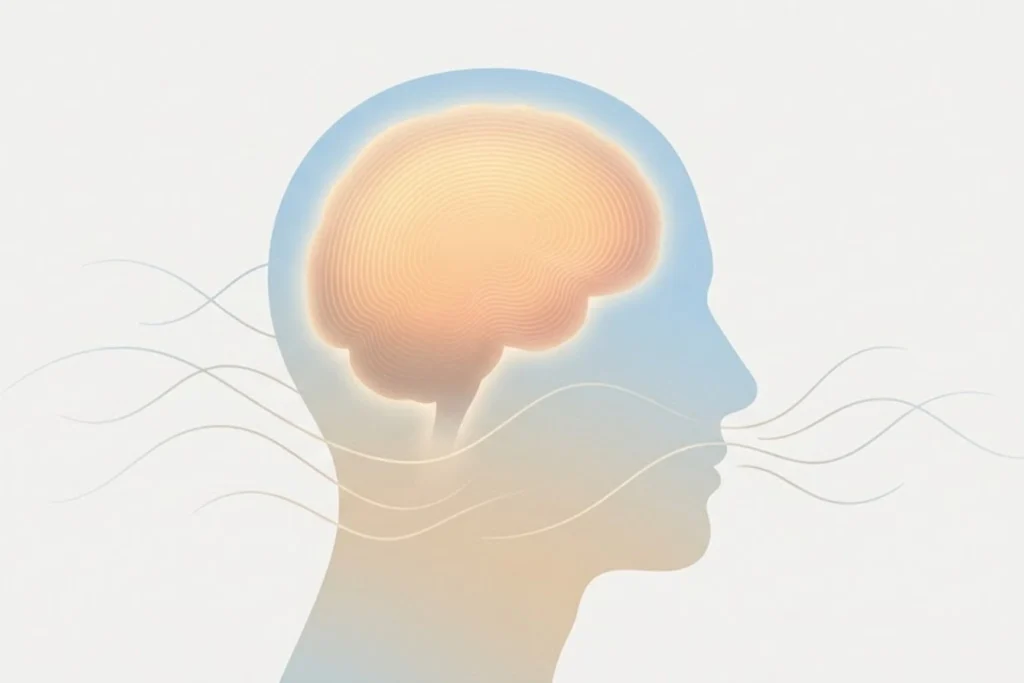
A 5-minute meditation for anxiety is any brief, intentional practice — breathing, body awareness, visualization, or focused attention — that interrupts the anxiety cycle and shifts your nervous system from fight-or-flight into rest-and-digest mode.
Here’s what happens in your body: when anxiety spikes, your amygdala (the brain’s alarm system) floods your system with cortisol and adrenaline. Short, focused mindfulness practices signal your vagus nerve to activate the parasympathetic nervous system — the “calm down” switch. You don’t need 30 minutes for that signal to land.
Research from the National Institutes of Health (NIH, 2018) found that even brief mindfulness interventions — as short as 5 minutes — produced measurable reductions in self-reported anxiety and physiological stress markers.
Five minutes works specifically because it’s small enough to not trigger resistance. Your brain won’t argue with five minutes the same way it argues with “meditate for thirty minutes every morning.” It also works for both daytime stress — the racing thoughts before a meeting — and sleep anxiety, making it a powerful tool for meditation for anxiety and sleep. That’s why short daily practice outperforms occasional long sessions, especially if you’re someone who struggles with meditation for sleep and anxiety at the end of a long day.
6 Proven 5-Minute Meditation Techniques for Anxiety
1. Box Breathing (4-4-4-4)
What it is: A structured breathing pattern used by Navy SEALs and ER physicians to control acute stress response.
How to do it:
- Sit upright or lie flat with your hands on your knees.
- Inhale slowly through your nose for 4 counts.
- Hold your breath at the top for 4 counts.
- Exhale completely through your mouth for 4 counts.
- Hold empty for 4 counts, then repeat for 5 rounds.
Why it works: The extended exhale activates your vagus nerve and drops your heart rate, directly countering the cortisol spike that feeds anxiety. The counting keeps your prefrontal cortex (logical brain) engaged, which quiets the amygdala.
Best time: During acute panic, before a high-stakes conversation, or mid-afternoon stress crash.
Real-life application: You’re sitting in your car in the parking lot before walking into a difficult performance review in Austin. Do two minutes of box breathing before you open the car door. You’ll walk in regulated, not reactive.
2. Body Scan Release
What it is: A guided internal attention practice where you move awareness slowly through different parts of your body, releasing tension as you go.
How to do it:
- Lie down or sit with your feet flat on the floor.
- Close your eyes and take three slow breaths to settle.
- Begin at the top of your head and notice any tightness, heat, or sensation.
- Move your attention slowly downward — jaw, neck, shoulders, chest, hands — pausing 5 seconds at each area.
- Silently say “release” as you exhale through each tense zone.
Why it works: Anxiety lives in the body before it reaches your thoughts. The body scan forces you to slow down and become a witness rather than a victim of tension. It also activates the parasympathetic nervous system through diaphragmatic breathing and intentional muscle release.
Best time: Before sleep, or any time your shoulders feel glued to your ears.
Real-life application: You’re at your desk in a Chicago open-plan office at 3 p.m., your shoulders are up around your ears, and you can’t afford to leave your chair. A 5-minute body scan with earbuds in looks like you’re just listening to music.
Can just 5 minutes of meditation really reduce anxiety?
A 5-minute meditation for anxiety can produce real, measurable relief within the same session. Studies published through the National Institutes of Health show that even brief mindfulness sessions of 5 to 13 minutes reduce subjective anxiety and lower cortisol levels. Consistency matters more than duration — five daily minutes outperforms one occasional hour.
3. The 5-4-3-2-1 Grounding Method
What it is: A sensory awareness technique that anchors your attention to the present moment, interrupting anxiety’s tendency to spiral into future-based worry.
How to do it:
- Take one slow breath to begin.
- Name 5 things you can see right now.
- Name 4 things you can physically feel (your feet on the floor, air on your skin).
- Name 3 things you can hear.
- Name 2 things you can smell, then 1 thing you can taste.
Why it works: Anxiety is almost always future-focused — “what if” thinking. Sensory grounding forces your attention into the present, which is where anxiety literally cannot survive. It engages your prefrontal cortex and breaks the amygdala’s hold.
Best time: During a panic moment, in a crowded place, or when intrusive thoughts won’t stop.
Real-life application: You’re in the middle of a grocery store in Denver and a wave of anxiety hits out of nowhere. You don’t need to sit down or close your eyes. Just quietly name five things you can see — the red cart, the overhead lights, the cereal aisle — and keep going.
4. Loving-Kindness for Anxiety (Metta)
What it is: A compassion-based meditation where you silently direct warmth toward yourself and others — an often-overlooked but research-backed anxiety tool.
How to do it:
- Sit comfortably and close your eyes.
- Place one hand on your chest.
- Silently repeat: “May I be safe. May I be calm. May I be well.”
- Picture someone you love and repeat: “May you be safe. May you be calm. May you be well.”
- Extend outward — to a neutral person, then to everyone — for one minute each.
Why it works: Self-directed compassion has been shown to reduce the self-criticism loop that amplifies anxiety. It also activates the brain’s reward centers, which counteract the negativity bias that anxious minds default to.
Best time: When your anxiety is self-directed — before a social event, after a mistake, or when imposter syndrome kicks in.
Real-life application: You’re about to present your work to a skeptical audience in a boardroom in Seattle. One minute of silent Metta before you walk in can shift you from self-doubt to steadiness.
5. Bedtime Breath Counting (for sleep anxiety)
What it is: A simple, repetitive counting practice designed specifically to break the cycle of nighttime anxious thinking and ease you into sleep.
How to do it:
- Lie flat on your back with arms slightly away from your sides.
- Close your eyes and breathe naturally — don’t force anything.
- On each exhale, count silently: one… two… three… up to ten.
- If you lose count, start at one again — without judgment.
- Continue until sleep comes, or for 5 minutes minimum.
Why it works: Sleep meditation for anxiety works by giving your mind something boring and repetitive to do, which competes with the anxious thought loops that thrive in silence. Counting occupies the verbal processing part of your brain just enough to crowd out rumination. It also slows your breathing, lowering cortisol naturally.
Best time: Lying in bed at night — this is built for meditation for sleep and anxiety.
Real-life application: You’ve been lying awake in Portland for 40 minutes replaying a conversation. Instead of picking up your phone, start counting breaths. Most first-timers are surprised to find they’re asleep before they hit ten — twice.
Does sleep meditation actually help anxiety at night?
Sleep meditation for anxiety works by calming the nervous system’s fight-or-flight response, which is what keeps anxious minds awake. When you slow your breathing and focus on a repetitive anchor like counting, cortisol levels drop within 10 to 15 minutes. Regular practice over two to four weeks has been shown to reduce nighttime anxiety and improve sleep onset time.
6. Morning Reset Meditation (for morning anxiety)
What it is: A short intention-setting and breath practice done within the first 10 minutes of waking — before you check your phone.
How to do it:
- Before sitting up, take 3 long, slow breaths with eyes still closed.
- Sit up and place both feet on the floor.
- Breathe in for 4 counts, out for 6 counts — 8 times.
- Ask yourself silently: “What’s one thing I can control today?”
- Let an answer come — don’t force it — then open your eyes.
Why it works: Cortisol naturally peaks within 30 to 45 minutes of waking (called the cortisol awakening response). A morning meditation for anxiety done at this window gives your nervous system a head start before the day’s demands pile on. The extended exhale activates the parasympathetic system precisely when you need it most.
Best time: First thing in the morning — before coffee, before email, before anything.
Real-life application: You wake up in Atlanta already dreading a packed schedule. Before reaching for your phone, you do 5 minutes of morning reset. By the time your feet hit the kitchen floor, your baseline anxiety level is measurably lower — and that carries through your morning.
What the Research Says About Meditation for Stress and Anxiety
Here’s the thing — this isn’t just anecdotal. The science behind meditation for stress and anxiety is solid enough to take seriously, even if you’re deeply skeptical.
A 2014 meta-analysis published in JAMA Internal Medicine — led by researchers at Johns Hopkins University — reviewed 47 clinical trials and found that mindfulness meditation programs produced moderate evidence of improved anxiety, depression, and pain. The key finding? Regular short practices produced consistent results, not just intensive retreats.
What this means for you: even a 5-minute practice, done daily for two to four weeks, can meaningfully shift your baseline anxiety level. It’s not magic — it’s repetition, the same way physical therapy works.
A second study from Harvard Medical School’s Department of Psychiatry (published in Psychiatry Research: Neuroimaging, 2011) found that eight weeks of mindfulness practice produced measurable changes in the amygdala — the brain region responsible for processing fear and anxiety. The amygdala actually shrank in grey matter density in participants who meditated regularly.
What this means for you: your anxious brain is not fixed. Even a 5 min meditation for anxiety, practiced consistently, can physically change how your brain processes threat — over time, reactions that used to hijack you become easier to manage.
The bottom line? Five minutes of daily meditation, practiced consistently, has real, documented effects on how your brain and body respond to anxiety — not someday, but within weeks.
Also Read: 10 Morning Yoga Poses to Start Your Day
Meditation Tips for Anxiety: 5 Things That Make It Actually Stick
Most people don’t fail at meditation because they’re doing it wrong. They fail because they’re trying to add a brand-new habit to an already full life. Here’s what actually works.
1. Use music as an anchor — but choose it carefully.
Pair your practice with the right audio and it becomes self-reinforcing. Binaural beats in the 40Hz range or ambient music tuned to 432Hz can reduce perceived anxiety and make the 5 minutes feel effortless rather than forced. Avoid anything with lyrics — your verbal brain will start singing along. Meditation for anxiety music works best when it’s the same track every session, creating a pavlovian cue your nervous system learns to respond to.
2. Stack it onto a habit you already have.
Don’t create a new routine from scratch — that’s where most people fail. Instead, attach your short meditation for anxiety to something you already do every day without thinking. Right after your first cup of coffee. Right before your morning shower. Right after you brush your teeth at night. The existing habit becomes the trigger.
3. Use a free guided app for the first 30 days.
Insight Timer has over 100,000 free guided meditations and a specific 5-minute anxiety category. UCLA Mindful offers free, evidence-based audio sessions directly from their mindfulness research center. Calm’s free tier includes a Daily Calm session. Having a voice guide removes the pressure of “am I doing this right” — which is the number one reason beginners quit.
4. Stop trying to empty your mind — that’s not the goal.
This is the part people skip because nobody explains it well. Your mind is not supposed to go blank. Thoughts will come. The practice is noticing the thought, not fighting it — then gently returning your attention to your breath. You’re training the returning, not the silence. Every time you notice you’ve drifted and come back, that’s a rep. You’re getting stronger.
5. Same time every day — even if it’s not perfect.
Consistency beats length every single time. A daily 3-minute practice done at the same moment every morning will reduce anxiety more over 30 days than a sporadic 20-minute session once a week. Timing trains your nervous system to anticipate calm — the benefit starts before you even sit down.
You Already Know How to Start
Here are the three things worth holding onto from everything above: five minutes is genuinely enough to shift your nervous system, consistency across weeks matters more than perfection in any single session, and the goal of meditation is never silence — it’s the practiced return to calm.
Starting something new when you’re already overwhelmed is genuinely hard. Nobody talks about how uncomfortable those first few sessions feel, or how weird it is to just sit there when your brain wants to solve a problem. That discomfort is normal. It passes.
Frequently Asked Questions
How long should I meditate for anxiety?
Meditating for just 5 minutes a day is enough to reduce anxiety, especially for beginners. Research shows that daily sessions as short as 5 to 13 minutes produce measurable reductions in stress markers over two to four weeks. Longer sessions can help, but starting small and staying consistent is far more effective than occasional longer practices.
Can meditation stop a panic attack?
Meditation techniques like box breathing can interrupt a panic attack within 2 to 5 minutes by activating the vagus nerve and lowering the heart rate. The key is practicing the technique before panic hits so your nervous system already knows the pattern. During a panic attack, focus on one long, slow exhale — that single action signals your body to downshift.
Is it OK to meditate lying down for anxiety?
Lying down is completely fine for meditation, especially for bedtime anxiety or body scan practices. The one caveat is that you’re more likely to fall asleep, which is actually a benefit if sleep is the goal. For daytime practices when you need to stay alert, sitting upright with feet flat on the floor tends to keep you more present and focused.
What is the best time of day to meditate for anxiety?
Morning is the most effective time for most people because cortisol is naturally high when you wake up, and a 5-minute meditation meets that peak head-on. That said, the best time is whichever time you’ll actually do it consistently. A bedtime practice works better for people whose anxiety is worst at night — regularity matters more than timing.
Does meditation help anxiety and sleep at the same time?
Meditation for anxiety and sleep works on both issues through the same mechanism — calming the nervous system and lowering cortisol. Sleep meditation for stress and anxiety practiced at bedtime has been shown to improve sleep onset time by 10 to 20 minutes in consistent practitioners over four weeks. A regular practice before bed also reduces the frequency of anxious nighttime awakenings over time.
Set a 5-minute timer right now. That’s all. Just start.


