
 Blog
BlogHemkund Sahib — Where Divinity Meets the Sky
The world's highest Gurudwara, cradled by seven Himalayan peaks at 4,329 metres above sea level. A complete travel guide covering altitude, trek distance, how to reach, Valley of Flowers, and everything you need to plan your pilgrimage.
Hemkund Sahib — At a Glance
Where Is Hemkund Sahib? — Location, Significance & the Sacred Lake
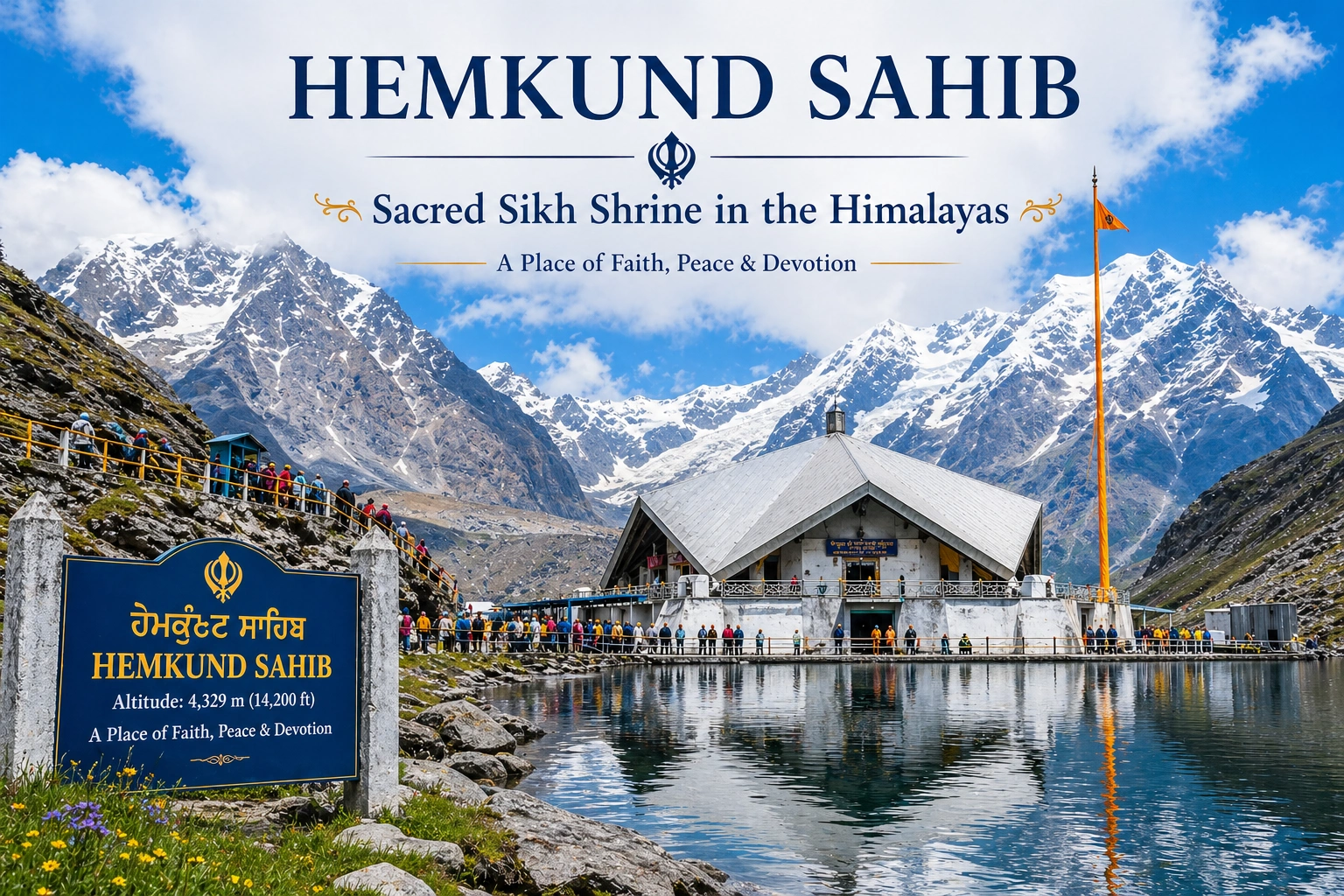
Hemkund Sahib is one of the most revered Sikh pilgrimage sites in the world, perched at a staggering altitude of 4,329 metres (14,202 feet) above sea level in the Chamoli district of Uttarakhand, India. Nestled between seven perpetually snow-capped Himalayan peaks and bordering a pristine glacial lake, this sacred destination draws hundreds of thousands of devotees, trekkers, and nature lovers every single season.
Known formally as Gurudwara Sri Hemkund Sahib Ji, the shrine holds immense spiritual significance in Sikhism. According to the Dasam Granth — the scripture written by Guru Gobind Singh Ji, the tenth Sikh Guru — this is the very site where he meditated in a previous life. For pilgrims, walking up to Hemkund Sahib is not just a physical trek; it is a deeply spiritual journey toward the divine.
Adjacent to the Gurudwara stands the shimmering Hemkund Lake, a glacial body of water whose crystal-clear icy surface perfectly mirrors the surrounding peaks. Pilgrims traditionally take a holy dip in the lake before entering the shrine. The entire landscape — lake, peaks, sky, and Gurudwara — creates one of the most breathtaking visual scenes anywhere in the Himalayas.
🌊 The Sacred Hemkund Lake
The Hemkund Lake directly adjoins the Gurudwara at 4,329 m. Its sacred glacial waters are considered divinely purifying. The lake is partially frozen in May–June and fully thawed by July. Surrounded by wildflowers in summer, it offers a scene of truly ethereal beauty and complete silence — broken only by the distant sound of Gurbani wafting from the shrine.
Plan your Hemkund Sahib pilgrimage with our expert-crafted tour packages — transport, stay & guide included.
Explore PackagesHemkund Sahib Altitude — The Highest Gurudwara in the World
The Hemkund Sahib altitude of 4,329 metres (14,202 feet) makes it the highest Gurudwara on Earth — and one of the highest places of worship of any religion anywhere on the planet. It sits higher than the base camps of many major Himalayan peaks, well above the tree line, in a stark world of glaciers, bare rock faces, and eternal snow.
The extreme Hemkund Sahib height means that even experienced, fit trekkers must pace themselves carefully. Reduced oxygen levels at this altitude can cause altitude sickness, making it strongly advisable to acclimatise at Ghangaria (3,048 m) for at least one night before attempting the final 6 km ascent.
| Landmark | Altitude |
|---|---|
| Hemkund Sahib Gurudwara | 4,329 m |
| Valley of Flowers Entrance | 3,658 m |
| Badrinath Temple | 3,133 m |
| Ghangaria (Base Camp) | 3,048 m |
| Joshimath | 1,890 m |
| Govindghat (Trek Start) | 1,828 m |
⚠️ Altitude Advisory
Visitors with heart conditions, severe asthma, or respiratory issues should consult a doctor before planning the trek. Children below 5 years and elderly pilgrims should consider pony or palanquin services available from Ghangaria. Portable oxygen cylinders are available for rent at Ghangaria.
Gurudwara Hemkund Sahib — A Living Monument of Sikh Faith
The Hemkund Sahib Gurudwara is managed by the Shiromani Gurudwara Prabandhak Committee (SGPC). The present-day shrine — a gleaming white star-shaped structure crowned with a golden dome — rises magnificently against the dark Himalayan rock and eternal snow. Its architecture is instantly recognisable, and it remains visible from the trail long before you reach the lake's edge.
Inside, the Guru Granth Sahib Ji is installed with full reverence. Kirtans (sacred hymns) fill the air at all hours. The community langar (free kitchen) serves hot meals to every single pilgrim without exception — regardless of caste, creed, or religion — making Hemkund Sahib a place not just of worship, but of radical, open-hearted human equality.
Adjacent to the Gurudwara stands a Laxman Temple, honouring the site where Lord Laxman — brother of Lord Ram — is believed to have meditated. This dual religious significance makes Hemkund Sahib sacred to both Sikhs and Hindus alike.
The Gurudwara opens each year in late May and closes after Diwali in October, when heavy snowfall makes the area completely inaccessible. Exact opening and closing dates are announced by the SGPC each year.
📅 Opening Season
Gurudwara Hemkund Sahib typically opens around 25th May and closes in mid-October (around Diwali). The shrine remains shut from November to April under several feet of snow. Always verify the exact dates with the SGPC or our travel desk before booking.
Hemkund Sahib Trek — Step-by-Step Route from Delhi
The Hemkund Sahib trek distance from base camp Ghangaria is 6 km one way (12 km round trip). However, the full journey from the motorable roadhead at Govindghat to Ghangaria is a further 14 km, making the total one-way trek from road to shrine roughly 20 km. Here is the complete day-by-day route from Delhi:
Delhi → Haridwar / Rishikesh
Drive or take an overnight train (approx. 6–7 hours). Stay overnight in Haridwar or Rishikesh to begin the acclimatisation process before entering higher altitudes.
Haridwar → Joshimath (270 km · ~9 hrs)
Drive through Devprayag, Rudraprayag, and Chamoli along the Alaknanda River valley. Stay overnight in Joshimath (1,890 m) for further acclimatisation.
Joshimath → Govindghat → Ghangaria (14 km trek)
Drive 19 km to Govindghat and begin the trek or take the helicopter to Ghangaria (3,048 m). The 14 km trail follows the Pushpawati River through beautiful forest and alpine terrain. Stay overnight at Ghangaria — essential for altitude acclimatisation.
Ghangaria → Hemkund Sahib → Ghangaria (12 km round trip)
Start early at 5–6 AM. Trek 6 km uphill to Hemkund Sahib (4,329 m) — the trail gains 1,300 m in altitude and is steep in the final 2 km. Attend morning Ardas, take a holy dip in the lake, visit the Laxman Temple, and partake in the langar. Return to Ghangaria by afternoon. Optional: visit the Valley of Flowers in the evening.
Valley of Flowers → Ghangaria → Govindghat → Return
Explore the Valley of Flowers in the morning (3 km from Ghangaria). Descend back to Govindghat and drive to Joshimath or onward to Haridwar.
| Segment | Distance | Duration |
|---|---|---|
| Govindghat → Ghangaria | 14 km | 5–7 hrs |
| Ghangaria → Hemkund Sahib | 6 km | 3–4 hrs |
| Total One Way (Road to Shrine) | 20 km | 8–11 hrs |
| Ghangaria → Valley of Flowers | 3 km | 1–2 hrs |
🚁 Helicopter Option
Helicopter services run between Govindghat and Ghangaria, reducing the 14 km trek to just a 10-minute flight. Pre-booking is essential and subject to weather clearance. Ideal for elderly pilgrims and families with young children.
⛰️ Trek Difficulty
Moderate to Strenuous. The steep 6 km climb from Ghangaria to Hemkund Sahib (1,300 m gain) combined with altitude makes this demanding. The Govindghat–Ghangaria stretch is moderate and suitable for most fitness levels.
Want a guided Hemkund Sahib trek with accommodation and transport fully arranged?
Book a Trek PackageHow to Reach Hemkund Sahib from Delhi — By Air, Train & Road
The most popular route starts from Delhi, roughly 500–510 km from Govindghat (the last motorable point before the trek). Here's every option available:
✈️ By Air
Nearest airport: Jolly Grant Airport, Dehradun (~273 km from Govindghat). Daily flights connect Delhi and Dehradun (45-min flight). From the airport, take a pre-booked taxi to Govindghat — 6 to 8 hours drive.
🚆 By Train
Nearest major station: Haridwar Railway Station (~281 km from Govindghat). Several overnight trains run daily from New Delhi to Haridwar. From Haridwar, take a private taxi or shared jeep to Govindghat via Rishikesh and Joshimath.
🚗 By Road (Self Drive / Cab)
Most flexible option. Route: Delhi → Haridwar → Rishikesh → Devprayag → Rudraprayag → Chamoli → Joshimath → Govindghat via NH-58. Total distance: ~500 km. Journey time: 12–15 hours. Recommended to break at Rishikesh (Day 1) and Joshimath (Day 2).
Badrinath to Hemkund Sahib Distance
Many pilgrims combine Hemkund Sahib with a Badrinath Dham visit — both are in Chamoli district. The Badrinath to Hemkund Sahib distance by road is approximately 83 kilometres (about 2.5 to 3 hours to Govindghat), followed by the 20 km trek. Combining both sacred sites into one itinerary is highly recommended and is included in our Badrinath + Hemkund Sahib combo packages.
| From | To | Distance | Est. Time | Mode |
|---|---|---|---|---|
| Delhi | Govindghat | ~500 km | 12–15 hrs | Road |
| Haridwar | Govindghat | ~281 km | 9–10 hrs | Road |
| Rishikesh | Govindghat | ~255 km | 8–9 hrs | Road |
| Badrinath | Hemkund Sahib | ~83 km + trek | ~1 full day | Road + Trek |
| Joshimath | Govindghat | ~19 km | 30 min | Road |
| Govindghat | Hemkund Sahib | 20 km | 8–10 hrs | Trek / Heli |
Valley of Flowers and Hemkund Sahib — One Base, Two UNESCO Experiences
One of the greatest travel blessings in the Himalayas is that both the Hemkund Sahib Valley of Flowers route shares the same trailhead. Both destinations are accessed via Govindghat and Ghangaria, meaning that with a well-planned itinerary, you experience two UNESCO World Heritage Sites in a single trip — without any extra travel.
The Valley of Flowers National Park sits at 3,658 m and is accessible from Ghangaria via a scenic 3 km trail. Open from June to October, the valley transforms into a surreal living carpet of over 500 species of alpine wildflowers — Himalayan blue poppies, cobra lilies, anemones, primulas, and rare medicinal herbs — against a backdrop of ice peaks and waterfalls.
While Hemkund Sahib represents the spiritual pinnacle — a place of prayer, silence, and divine connection — the Valley of Flowers offers an equally overwhelming experience of nature's breathtaking abundance. Together, they make one of India's most complete and memorable Himalayan journeys.
🌺 Best Time for Valley of Flowers
Mid-July to mid-August is peak bloom season with the richest variety of flowers. June offers early blooms and quieter trails. September delivers clear blue skies, fewer crowds, and golden meadows. October sees the first snowfall and the last wildflowers before closure.
Book our combined Valley of Flowers + Hemkund Sahib package — the most popular itinerary we offer.
Book Combined Package →Best Time to Visit Hemkund Sahib — Month-by-Month Guide
Hemkund Sahib is open for approximately five months per year. Each month offers a distinctly different experience — from pristine snowscapes to vibrant wildflowers to crisp autumn skies.
★ Best months | Open months (no star) | ✕ Closed (heavy snow)
🌨️ May – June
Fresh opening season. Snow blankets the upper reaches and the lake may be partially frozen. Moderate crowds. Carry heavy woolens — temperatures drop sharply at night. Stunning snow photography.
🌸 July – August (Best)
Valley of Flowers in full bloom. Peak pilgrim rush — book accommodation in advance. Warm days, cool nights. Occasional rainfall — carry quality waterproofs. The most vibrant and festive time to visit.
🍂 September – October
Excellent clear weather, thinner crowds, panoramic mountain views. First snowfall possible in late October. The most serene and photogenic time for a spiritual, contemplative visit.
Hemkund Sahib Tour Packages — Crafted for Every Pilgrim
From quick 5-day spiritual retreats to 10-day Himalayan odysseys combining Hemkund Sahib, Valley of Flowers, and Badrinath Dham — all packages include accommodation, private transport, and certified trek guides.
Hemkund Sahib Darshan
5 Days / 4 Nights
- Delhi – Haridwar – Govindghat – Ghangaria
- Hemkund Sahib Trek (both ways)
- All accommodation included
- Private cab & certified trek guide
- Langar assistance & puja arrangements
Starting from
₹9,999 / person
Enquire NowHemkund Sahib + Valley of Flowers
7 Days / 6 Nights
- Complete Hemkund Sahib Darshan
- Full-day Valley of Flowers visit
- Govindghat helicopter option available
- Best-in-class Ghangaria accommodation
- All meals during trek included
- First-aid kit & certified mountain guide
Starting from
₹14,999 / person
Book This Package →Hemkund Sahib + Badrinath Combo
8 Days / 7 Nights
- Hemkund Sahib darshan & full trek
- Badrinath Dham visit & Mana Village
- Valley of Flowers optional add-on
- Joshimath & Auli sightseeing
- All transfers & accommodation
Starting from
₹18,499 / person
Enquire NowNeed a custom itinerary? Our Himalayan travel experts will design a package perfectly tailored to your group size, budget & schedule.
Get a Custom Quote — It's FreeEssential Travel Tips for Hemkund Sahib
Health & Acclimatisation
Spend at least one night at Ghangaria (3,048 m) before trekking to Hemkund Sahib. Avoid alcohol, smoking, and heavy meals at altitude. Carry Diamox if prescribed. Hydrate constantly throughout the trek.
Where to Stay
Ghangaria is the only overnight stay option near the shrine. The SGPC runs free or very affordable rest houses. Private guesthouses and camps are also available. Book in advance during July–August peak season.
Mobile & ATMs
Mobile network (BSNL works best) available up to Ghangaria. No connectivity on the Hemkund Sahib trail. Inform family before the final trek. ATMs are only available up to Joshimath — carry sufficient cash.
Food & Water
The SGPC langar at Hemkund Sahib and Ghangaria serves free nutritious meals to all visitors. Carry adequate water and refill at Ghangaria. Packaged water is available en route. Eat light before the high-altitude climb.
Permits & Entry
No special permit is required for Hemkund Sahib. The Valley of Flowers charges an entry fee: ₹150 for Indian nationals, ₹600 for foreigners. Carry a valid government ID. SGPC registration may be needed for rest house bookings.
Responsible Travel
Hemkund Sahib lies inside the Nanda Devi Biosphere Reserve. Carry all waste back. Plastic bags and single-use plastics are banned in the area. Remove footwear before entering the Gurudwara. Respect the sanctity of this sacred site.
Hemkund Sahib — All Your Questions Answered
Where is Hemkund Sahib located?
Hemkund Sahib is located in the Chamoli district of Uttarakhand, India, in the Garhwal Himalayas. It sits on the banks of the glacial Hemkund Lake at an altitude of 4,329 metres, surrounded by seven Himalayan peaks. The nearest town is Joshimath, approximately 52 km away by road.
What is the altitude of Hemkund Sahib?
The Hemkund Sahib altitude is 4,329 metres (14,202 feet) above sea level, making it the highest Gurudwara in the world and one of the highest places of worship of any religion on Earth.
What is the Hemkund Sahib trek distance?
The Hemkund Sahib trek distance from Ghangaria is 6 km one way (12 km round trip). From the roadhead at Govindghat, the total one-way trek is approximately 20 km — 14 km from Govindghat to Ghangaria, plus 6 km from Ghangaria to the shrine.
How to reach Hemkund Sahib from Delhi?
The best route is by road via NH-58: Delhi → Haridwar → Rishikesh → Devprayag → Srinagar → Joshimath → Govindghat, covering approximately 500 km in 12–15 hours. Alternatively, fly to Dehradun (Jolly Grant Airport) or take an overnight train to Haridwar, then drive to Govindghat.
What is the distance from Badrinath to Hemkund Sahib?
The Badrinath to Hemkund Sahib distance by road is approximately 83 km, taking about 2.5–3 hours by car to Govindghat, followed by the 20 km trek to the shrine. Both sites are in Chamoli district and are easily combined in one trip.
Can I visit Valley of Flowers and Hemkund Sahib together?
Absolutely — and it is highly recommended. Both the Valley of Flowers and Hemkund Sahib share the same base at Ghangaria. A 7-day itinerary lets you comfortably visit Hemkund Sahib on Day 4 and the Valley of Flowers on Day 5. Our combined packages are designed exactly for this.
When does Hemkund Sahib open and close?
Hemkund Sahib typically opens in late May (around 20th–25th May) and closes in October after Diwali. Exact dates vary each year based on snowfall conditions and are announced by the SGPC. The shrine remains completely closed from November to April.
Is the Hemkund Sahib trek safe for beginners?
The Govindghat to Ghangaria section is suitable for most fitness levels, including beginners. The Ghangaria to Hemkund Sahib section is steep and demanding due to altitude, but manageable with proper pacing and acclimatisation. Pony and palanquin services are available for those who need assistance.
Ready to Walk the Path to Hemkund Sahib?
Let our experienced Himalayan travel specialists handle every detail of your pilgrimage — from transport and accommodation to trek guides and puja arrangements. Your divine journey awaits.


