
 Blog
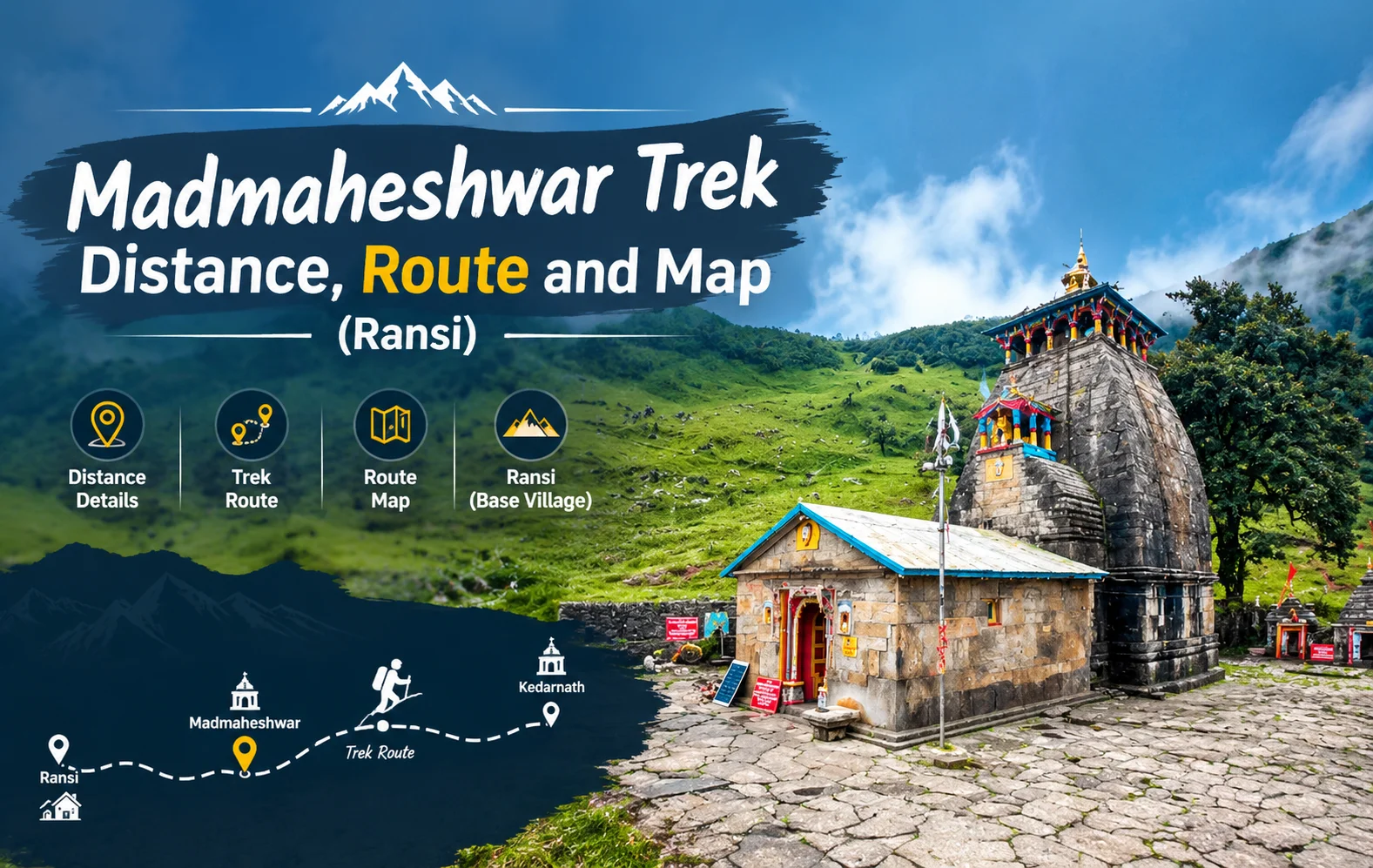
BlogPlanning the Madmaheshwar trek and wondering how far it really is, which route to take, and how to reach the starting point? This guide covers the trek distance stage by stage, the road journey from Haridwar, Rishikesh and Dehradun to Ransi, the best time to go, and how a private cab makes the whole plan simpler.
What Is the Madmaheshwar Trek?
Madmaheshwar, also written as Madhyamaheshwar, is the second shrine of the Panch Kedar, the five Himalayan temples linked with Lord Shiva. According to the traditional belief, this is where the navel of Shiva's bull form appeared. The other four shrines are Kedarnath, Tungnath, Rudranath and Kalpeshwar. If you have already read about the history of Kedarnath Temple, the Panch Kedar story will feel familiar.
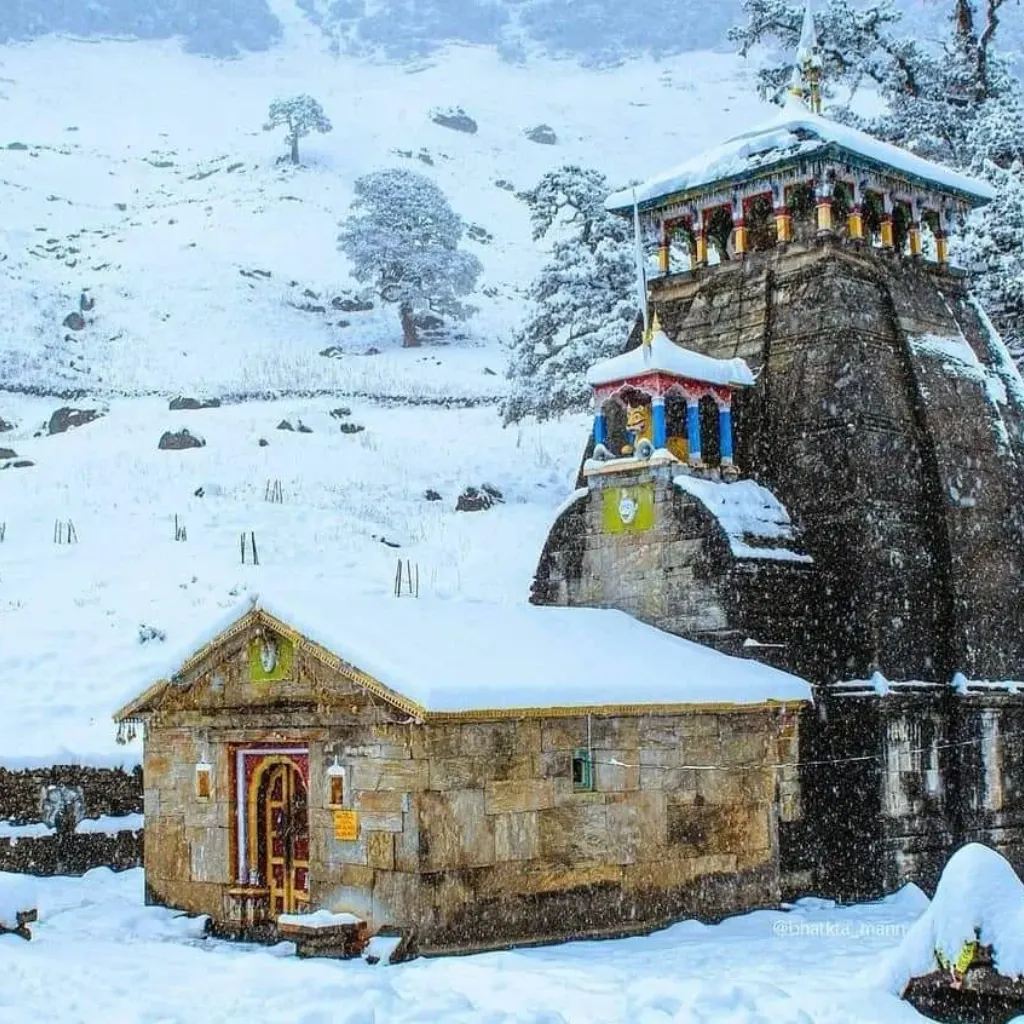
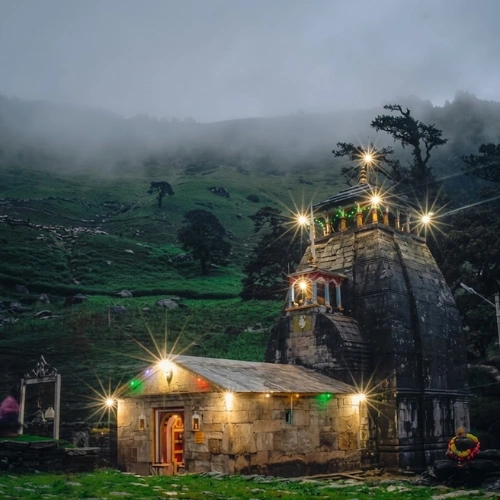
The temple sits in the Madmaheshwar valley of Rudraprayag district, at a height commonly quoted as somewhere between 3,300 and 3,500 metres depending on the source. There is no road to the shrine. The Madmaheshwar temple trek starts from Ransi village near Ukhimath and runs through forest, river valleys, small hamlets and finally open alpine meadows. The area falls inside the Kedarnath Wildlife Sanctuary, which is one reason the trail is so green. For context on the wider region, our guide to national parks in Uttarakhand is a useful read.
In winter, when snow closes the high shrine, the deity is worshipped at the Omkareshwar Temple in Ukhimath. That is why many pilgrims combine a stop in Ukhimath with their trip, especially if they are already travelling through Ukhimath on the Kedarnath route.
Madmaheshwar attracts two kinds of travellers: pilgrims who want to complete the Panch Kedar circuit, and trekkers who want a quieter alternative to the crowded Kedarnath trail. Both groups ask the same first question, which is how far the trek actually is. Let us answer that properly.
Madmaheshwar Trek Distance Explained
The Madmaheshwar trek distance is about 16 km one way from Ransi to the temple. You will see other numbers online, such as 14 km, 18 km or even 24 km. These differences are not mistakes as much as they are different measuring habits. Some guides count from Ransi village, some from a point slightly further down the road, and some include the extra walk to Budha Madmaheshwar. Trail repairs and landslide diversions can also add or remove a kilometre or two from season to season.
For planning purposes, use these working figures: about 16 km uphill-and-downhill walking one way, around 32 km for a return trek, and roughly 18 km if you add the short climb to Budha Madmaheshwar and back to the temple.
| Detail | Approximate figure |
|---|---|
| Trek starting point | Ransi village, near Ukhimath, Rudraprayag district |
| Madmaheshwar trek distance (one way) | About 16 km (sources range 14 to 18 km) |
| Round trip on foot | About 32 km |
| Extra to Budha Madmaheshwar | About 2 km one way from the temple |
| Ransi village altitude | About 1,980 m |
| Temple altitude | Roughly 3,300 to 3,500 m (varies by source) |
| Typical trek time up | 7 to 9 hours of walking, usually split over two days |
| Typical trek time down | 5 to 7 hours |
| Road distance Ukhimath to Ransi | About 30 km |
Planning note: Treat every distance on this page as an approximation. Trail conditions change after monsoon and winter, so confirm the current situation with a local guide or your homestay before you start walking.
Why the first 6 km feel easy and the rest does not
Many first-timers misjudge this trek. The first stretch from Ransi to Gaundar is mostly a descent, so you cover about 6 km quickly and feel strong. The real work begins after the river confluence near Bantoli. From there the trail climbs steadily through oak and rhododendron forest, and the last section above the tree line is slow going. A 16 km figure on paper becomes a very long day when most of it is uphill at altitude.
Madmaheshwar Trek Route Map and Stage-by-Stage Breakdown
Instead of a hard-to-read image, here is a simple route map in the order you will actually walk it. It is schematic and not drawn to scale, but the distances between points are close to what trekkers report.
- Ransi village (start)Last motorable point, about 1,980 m. Parking, small shops and homestays. Register your trek plan with your host here.
- Gaundar village (about 6 km from Ransi)Mostly downhill through forest to the riverside. Basic stay and food available.
- Bantoli (about 2 km from Gaundar, around 8 km from Ransi)Meeting point of the Martyenda and Madmaheshwar Ganga rivers. This is where the steep climb starts. Best choice for an overnight halt.
- Khatara (roughly 2 to 3 km above Bantoli)Small stop with tea stall. Forest gets denser and the climb is steady.
- Nanu Chatti (about 4 km from Bantoli, roughly 12 km from Ransi)Last cluster of basic facilities before the meadows open up.
- Madmaheshwar Temple (about 4 km from Nanu, roughly 16 km from Ransi)Stone temple in an alpine meadow with views of Chaukhamba. Simple stay and food available in season.
- Budha Madmaheshwar (about 2 km further)Optional climb to a small shrine and viewpoint above the temple.
| Stage | Distance | Typical time | What to expect |
|---|---|---|---|
| Ransi to Gaundar | About 6 km | 2 to 2.5 hours | Mostly descent, forest and village paths |
| Gaundar to Bantoli | About 2 km | 1 hour | Short walk to the river confluence |
| Bantoli to Nanu Chatti (via Khatara) | About 4 km | 2.5 to 3 hours | Steady, steep climb through forest |
| Nanu Chatti to Madmaheshwar | About 4 km | 2 to 2.5 hours | Forest thins, meadows begin, thinner air |
One practical point: village names are spelled in many ways, including Gaundar, Gondar and Gaundhar, and Bantoli appears as Bantholi. If you are asking locals or booking a homestay, use the spelling they use. Our guide on the difference between trekking and hiking also helps you judge whether this walk suits your experience level.
Need a cab to Ransi, the Madmaheshwar trek starting point?
Tell us your pickup city and travel dates. We will share a clear quote for a sedan, Innova or Tempo Traveller.
How to Reach Madhyamaheshwar: The Road Journey to Ransi
When people search how to reach Madhyamaheshwar, they usually mean two things: how to reach Ransi by road, and then how to do the trek. The trek part is fixed, so the road part is where planning makes the difference.
The standard route runs Haridwar or Rishikesh, then Devprayag, Srinagar, Rudraprayag, Ukhimath, and onward to Ransi via Unianaa. Up to Rudraprayag you are on the same Char Dham corridor that leads to Kedarnath and Badrinath. After Rudraprayag the Kedarnath road continues towards Guptkashi, while the Madmaheshwar route turns off at Ukhimath and climbs to Ransi on a narrower hill road.
| Starting city | Approx. road distance to Ransi | Typical driving time |
|---|---|---|
| Rishikesh | About 210 km | 8 to 9 hours with stops |
| Haridwar | About 230 to 240 km | 9 to 10 hours with stops |
| Dehradun (Jolly Grant Airport / railway station) | About 240 to 260 km | 9 to 10 hours with stops |
| Delhi NCR | About 450 to 470 km | Best split with a night in Haridwar or Rishikesh |
| Ukhimath | About 30 km | 1.5 to 2 hours |
These are planning estimates. Actual time depends on traffic, roadwork, weather and landslide clearance. Always check Kedarnath road status updates before leaving, because the same highway carries Madmaheshwar traffic until Rudraprayag.
From Haridwar and Rishikesh
Most pilgrims start from Haridwar. The drive follows the Ganga upstream through Devprayag, where the Alaknanda and Bhagirathi meet, and then climbs along the Alaknanda to Rudraprayag. If you are comparing routes, our guides on Haridwar to Kedarnath yatra and Rishikesh to Kedarnath distance describe the shared stretch in detail. Starting from Rishikesh saves about an hour compared with Haridwar.
From Dehradun
Travellers who fly into Jolly Grant Airport or arrive at Dehradun railway station can head straight into the hills. The first part of the drive to Rishikesh is easy, and after that the route is identical. For the shared highway section, see Dehradun to Kedarnath distance.
From Delhi
Driving from Delhi to Ransi in one go is tiring and not recommended. A better plan is to reach Haridwar or Rishikesh on day one, rest, and start early the next morning. Our how to reach Kedarnath from Delhi guide explains the options.
Useful halts on the way
Rudraprayag and Ukhimath are the natural overnight halts if you want to reach Ransi fresh in the morning. If you are combining the trip with Kedarnath, Guptkashi is the usual base, and Gaurikund is the Kedarnath trek starting point. Those staying around Sari or Chopta can also check how to reach Sari village and the Rudraprayag to Chopta distance.
Why a private cab works well for Ransi
The last 30 km from Ukhimath to Ransi is a narrow hill road. Shared transport is limited, timings are irregular, and you will almost certainly be carrying a trekking bag. A private cab lets you start at sunrise, stop when you need to, and reach Ransi in time to begin walking the same afternoon.
For families, elderly pilgrims and first-time visitors, a driver who knows the Rudraprayag to Ukhimath stretch removes a lot of guesswork. If you are planning the Madmaheshwar trek along with the Char Dham, a single vehicle for the full trip is simpler than changing transport at every stage.
Budha Madmaheshwar: Is the Extra Climb Worth It?
Budha Madmaheshwar is a small shrine on a high ridge about 2 km above the main temple. Pilgrims often call it the older or "elder" seat. The climb is short but steep, and the reward is a wide view of the Chaukhamba range and the valley below. In clear weather, a sunrise from here is the highlight of the trip for many trekkers.
If you reach Madmaheshwar by early afternoon and the weather is stable, you can do the climb the same day. Otherwise, leave it for the next morning, then walk down. Do not attempt it if clouds are building or if anyone in your group has headaches or breathlessness. Our guide on early symptoms of altitude sickness explains what to watch for.
Devotional trekkers often carry a small speaker or recite while walking. If you want something to listen to or read on the way, our collection of Shiv Ji bhajan lyrics in Hindi and the Shiv Tandav Stotram with meaning are a good companion.
Madmaheshwar Trek Difficulty: Is It Beginner-Friendly and Which Is Harder Than Kedarnath?
The Madmaheshwar trek is generally rated moderate. It is not technical, and you do not need ropes or special gear. What makes it demanding is the length, the sustained uphill after Bantoli, and the altitude near the top. A fit beginner who walks regularly and takes two days can complete it. Someone who has never walked more than a few kilometres at a time, or who has heart, lung or knee problems, should consult a doctor first and think carefully.
Which trek is harder, Kedarnath or Madmaheshwar?
Both treks are around 16 km one way, so distance alone does not decide it. The honest answer is that they are hard in different ways.
| Factor | Kedarnath trek | Madmaheshwar trek |
|---|---|---|
| Starting point | Gaurikund | Ransi |
| Distance one way | About 16 km | About 16 km |
| Trail type | Wide, paved or well-laid path | Narrower forest and mountain trail |
| Crowd | Very high in season | Low, peaceful |
| Facilities on route | Many shops, tea stalls, medical posts | Basic homestays and tea stalls |
| Altitude at the shrine | About 3,583 m | Roughly 3,300 to 3,500 m |
| Best suited for | Pilgrims wanting support along the way | Trekkers wanting quiet and nature |
Kedarnath is a little higher and busier, but the path is wide and supported. Madmaheshwar has less altitude but fewer facilities, so you rely more on your own stamina and planning. If you want to compare, read our Kedarnath temple trek guide.
Who should avoid it?
Skip or postpone the trek if you have recent injuries, uncontrolled blood pressure, serious breathing issues, or if you are travelling with young children who cannot walk long distances. Elderly pilgrims who still wish to visit the region can choose other Panch Kedar or Char Dham experiences with vehicle access instead.
How Much Time Does the Madmaheshwar Trek Take? Sample Itinerary
Most people need 4 to 5 days in total from Haridwar or Rishikesh, including road travel. You can compress it, but that leaves little buffer for weather or a slow day.
Sample 5-day plan from Haridwar or Rishikesh
- Day 1: Drive from Haridwar or Rishikesh to Ukhimath or Ransi (about 8 to 10 hours). Overnight at Ukhimath or Ransi.
- Day 2: Trek from Ransi to Gaundar and Bantoli. Overnight at Bantoli or Gaundar (about 8 km, 3 to 4 hours).
- Day 3: Trek from Bantoli to Madmaheshwar via Khatara and Nanu Chatti (about 8 km, 5 to 6 hours). Evening aarti and overnight at the temple area.
- Day 4: Optional sunrise climb to Budha Madmaheshwar. Return trek to Bantoli or Ransi depending on energy and weather.
- Day 5: Drive back to Haridwar, Rishikesh or Dehradun.
Faster version for fit trekkers
Strong walkers sometimes go from Ransi to the temple in one long day, leaving at first light, then stay at the temple and return in a day. That is possible, but it is tiring and leaves no margin if rain starts. For a first attempt, the two-night version is safer and more enjoyable.
How long is the trek from Ransi to Madmaheshwar?
Ransi to Madmaheshwar is about 16 km and takes roughly 7 to 9 hours of walking on the way up. Add rest stops and you are looking at a full day. The return takes less time, around 5 to 7 hours, since most of it is downhill.
Best Time to Visit Madmaheshwar
The temple opens only for part of the year, usually from around May to November. Exact dates are announced each year by the temple committee, so verify them before booking. Our Kedarnath temple opening and closing date and Kedarnath closing date pages follow similar seasonal patterns for the region.
| Season | Months | What to expect |
|---|---|---|
| Pre-monsoon | May to June | Pleasant days, clear views, cold nights. Good for first-time trekkers. |
| Monsoon | July to August | Heavy rain, slippery trail, landslide risk. Not recommended for beginners. |
| Post-monsoon | September to October | Clean air, green meadows, stable weather. Often the best window. |
| Late season | Early November | Very cold. Temple closing period, check dates first. |
| Winter | Late November to April | Snow on the trail. Temple closed. Only for experienced winter trekkers. |
So, which month is best for the Madmaheshwar trek? For most people, September and October give the best balance of weather and views, with May and early June as a good second choice. If you are also planning Kedarnath, our guides on the best time to visit Kedarnath, which month is best to visit Kedarnath, and the best season for a peaceful Kedarnath trip overlap with this window. For the full circuit, see the best time to visit Char Dham. If you prefer snow and quiet, browse the best winter treks in Uttarakhand instead.
Is the Madmaheshwar Trek Safe? Safety, Packing and Altitude
Yes, the trek is considered safe for reasonably fit people in the right season, and it is walked by pilgrims and trekkers every year. The risks are mostly weather, fatigue and altitude. Rain can make the forest path slippery, fog can reduce visibility, and a landslide can cut the road to Ransi on short notice.
Safety checklist
- Start early, ideally by 6:30 or 7 AM, so you reach your halt before afternoon clouds.
- Do not walk after dark. The trail is not lit.
- Hire a local guide or porter if you are new to Himalayan trekking. Ask your homestay at Ransi.
- Carry enough water and snacks. Shops are limited.
- Keep emergency numbers and tell someone your plan. Mobile signal is patchy beyond Gaundar.
- Watch the weather forecast and keep a spare day in your plan.
Altitude and health
The temple is high enough for altitude sickness to affect some people. Walk slowly, drink water, and rest if you get a headache, nausea or dizziness. Do not climb higher with symptoms. These guides are worth reading before you go: Kedarnath altitude preparation guide, how to prevent altitude sickness, and the Diamox guide for Char Dham yatra. Always ask your doctor before taking any medicine.
What to pack
- Broken-in trekking shoes with good grip, plus spare socks.
- Layers: thermal innerwear, fleece, a warm jacket and a rain jacket or poncho.
- Woollen cap, gloves and sunglasses with UV protection.
- A 30 to 40 litre backpack with a rain cover. Keep it light.
- Trekking pole, headlamp, power bank, and a basic first-aid kit.
- Photo ID. Carry copies and keep one set with your driver or host.
Rain is common in the hills even outside monsoon, so our Kedarnath monsoon packing list is useful for this trek too.
If the road closes
Landslides can block the highway, and that can delay or stop your trip. Read what to do if the Kedarnath route closes and why yatra gets halted by landslides to understand the options. A flexible plan and a spare day in your itinerary are the best protection.
Registration and permits
Char Dham yatra registration applies to Kedarnath, Badrinath, Gangotri and Yamunotri. Rules for other treks such as Madmaheshwar can differ, and forest-related requirements may apply in the sanctuary area. Ask your guide or the local forest office for the current position before you start. If you also plan the Char Dham, these pages will help: Char Dham yatra registration, how to do registration online, documents required, offline registration counters, yatra opening date, registration start date and Kedarnath yatra registration 2026.
Chat with us on WhatsApp
Send your pickup city, travel dates and number of travellers. We will reply with vehicle options and a clear quote for the Ransi trip.
Transport Options for the Madmaheshwar Trek Compared
| Option | Pros | Things to consider |
|---|---|---|
| Private cab | Flexible timing, door-to-door, luggage space, suits families and elders | Higher cost than shared transport |
| Shared taxi or jeep | Cheaper per person on common routes | Fixed timings, limited seats, often only to Ukhimath or Rudraprayag |
| Bus | Lowest cost to Rishikesh, Srinagar, Rudraprayag | Needs a local change near Ukhimath, slow and crowded in season |
| Self-drive | Full freedom | Mountain driving experience required, parking at Ransi is limited |
For most pilgrims and families, a private cab is the simplest choice. If you want to extend the trip to Badrinath, our route guides on Haridwar to Badrinath distance, Dehradun to Badrinath distance, how to reach Badrinath, Kedarnath to Badrinath distance and how to go from Kedarnath to Badrinath will help. Those planning Sikh pilgrimage in the same trip can read about Hemkund Sahib too.
Cab Options for Madmaheshwar Trek: Haridwar, Rishikesh and Dehradun to Ransi
Choose the vehicle based on your group size and luggage. All vehicles below can be booked for pickup from Haridwar, Rishikesh, Dehradun, Jolly Grant Airport and Delhi NCR. Vehicle models may vary by availability.
One-way, round trip and wait-and-return
Since the trek takes two to three days, you have two sensible choices. You can book a drop at Ransi and a return pickup on a fixed date, or keep the same cab on a round-trip basis where the driver waits near Ransi. The first option is usually cheaper if you are sure of your return date. The second is easier if you want flexibility. Tell us your plan when you call and we will suggest the better fit.
Cab Fare for Madmaheshwar Trek (Ransi): What to Expect
Taxi fares in the hills depend on season, vehicle, route, number of days and whether the driver waits. The table below gives a general planning guide per day and an example for a 3-day trip. It is not a fixed rate card, and the final quote is confirmed when you speak to us.
| Vehicle | Seating | Indicative per-day charge | Example: 3-day trip |
|---|---|---|---|
| Sedan (Dzire or similar) | 4 | Rs 3,800 to Rs 4,500 | Roughly Rs 11,500 to Rs 13,500 |
| Innova | 6 | Rs 5,000 to Rs 5,800 | Roughly Rs 15,000 to Rs 17,500 |
| Innova Crysta | 6 to 7 | Rs 6,000 to Rs 7,000 | Roughly Rs 18,000 to Rs 21,000 |
| Tempo Traveller (12 seater) | 12 | Rs 8,000 to Rs 9,500 | Roughly Rs 24,000 to Rs 28,500 |
Please note: Fares above are indicative estimates only and may change with season, demand, fuel, vehicle availability and routing. Tolls, parking, state taxes, driver allowance and night-halt charges may be extra depending on the booking. Call 9368028472 for an exact quote before you confirm.
What affects the fare
- Pickup city: Rishikesh is closer to Ransi than Haridwar or Dehradun, so the distance and time are lower.
- Number of days: Hill taxis are normally billed per day, with a daily kilometre cap, so a longer wait raises the cost.
- Season: Peak months such as May, June, September and October see higher demand.
- Vehicle type: Larger and premium vehicles cost more per day.
- Combined trips: Adding Kedarnath, Chopta or Badrinath to the same booking changes the total, but one vehicle for the whole trip is often easier to manage.
Travelling as a group?
Group treks work well with a Tempo Traveller. Splitting the cost across 8 to 12 people often brings the per-person price below that of two separate cabs, and everyone arrives together. It also makes it easier to keep a common start time at Ransi.
Share your group size and dates, and we will suggest the right seating and luggage space.
Madmaheshwar Trek Package Price and Who Should Choose Which Option
Packages for the Madmaheshwar trek vary widely. Prices depend on the number of days, group size, quality of stay, whether a guide and porter are included, meals, and transport from the starting city. Because of that, asking for a single "price of Madmaheshwar trek package" rarely gives a useful number. Always ask for an itemised quote that lists what is included and what is not.
Questions to ask before you pay
- Is the cab to and from Ransi included, and from which city?
- Are guide, porter, stay and meals included for every night?
- What happens if the road closes or rain delays the trek?
- Are tolls, parking and driver allowance included?
- What is the cancellation and refund policy?
A simple way to plan on your own
Many travellers prefer to book only the cab with us and arrange homestays and a local guide at Ransi directly. That gives control over the budget. A rough way to estimate cost is: cab fare for 3 to 4 days, plus homestay and food per night, plus guide or porter if needed, plus a small buffer for weather days.
Who should choose this trek?
- Pilgrims completing Panch Kedar: Yes, with a two-night plan and a guide.
- First-time Himalayan trekkers: Possible if reasonably fit and travelling in May, September or October.
- Families with elders or small kids: Better to use the road for Kedarnath and skip this trek, unless everyone is a confident walker.
- Experienced trekkers: A great quiet alternative, and a good base to extend to nearby Himalayan walks.
If you are pairing this with a larger yatra, our correct order to visit Char Dham and 10-day Char Dham yatra itinerary with acclimatization help you place Madmaheshwar sensibly. For those who prefer to fly the Kedarnath leg, see Kedarnath helicopter yatra booking.
Madmaheshwar Trek FAQs
How long is the Madmaheshwar trek?
The Madmaheshwar trek is about 16 km one way from Ransi, or around 32 km round trip. Guides quote 14 to 18 km depending on where they measure from. Add about 2 km each way if you plan to visit Budha Madmaheshwar.
How long is the trek from Ransi to Madmaheshwar?
Ransi to Madmaheshwar is about 16 km and takes 7 to 9 hours of walking uphill. Most people split it with a night at Gaundar, Bantoli or Khatara. The descent takes around 5 to 7 hours.
How much time will it take to complete the Madmaheshwar trek?
Plan for 3 days on the trail and 4 to 5 days in total from Haridwar or Rishikesh. This covers the road journey, two trek days up and down, and a buffer for weather. Fit trekkers can compress it, but a spare day is wise.
What is the difficulty level of the Madmaheshwar trek?
The trek is moderate. It is not technical, but the length, the steady climb after Bantoli and the altitude near the temple make it tiring. Regular walking practice for a few weeks before you go makes a clear difference.
Is the Madmaheshwar trek beginner-friendly?
It can be, for fit beginners who take two days and travel in a stable season. It is not a good first trek for people with health issues or no walking habit. Hire a local guide if you are new to the mountains.
Which trek is harder, Kedarnath or Madmaheshwar?
Neither is clearly harder, as both are about 16 km one way. Kedarnath is higher and far more crowded but has a wide, supported path. Madmaheshwar is quieter with a narrower trail and fewer facilities, so you depend more on your own stamina and planning.
Is the Madmaheshwar trek safe?
Yes, for fit trekkers in the right season. The main risks are rain, fog, fatigue and altitude. Start early, avoid walking in the dark, and skip the trek during heavy rain or after a landslide warning.
Which month is best for the Madmaheshwar trek?
September and October are usually best, with May and early June as a second choice. Avoid July and August because of heavy rain and landslides. The temple generally remains closed in winter.
What is the price of a Madmaheshwar trek package?
There is no single price, since it depends on days, group size, stay, guide, porter, meals and transport. Ask for an itemised quote. If you plan independently, estimate cab fare, homestay and food per night, and guide or porter charges separately.
Where does the Madmaheshwar trek start?
It starts at Ransi village, about 30 km from Ukhimath in Rudraprayag district. Ransi is the last point reachable by road.
What is Budha Madmaheshwar?
Budha Madmaheshwar is a small shrine and viewpoint about 2 km above the main Madmaheshwar temple. It offers wide views of the Chaukhamba range and is best visited at sunrise in clear weather.
How far is Madmaheshwar from Haridwar by road?
Ransi, the trek starting point, is about 230 to 240 km from Haridwar and takes roughly 9 to 10 hours by road. From Rishikesh it is about 210 km. These figures are approximate and depend on traffic and road conditions.
Can I take a cab directly to Ransi?
Yes. A private cab can drive you all the way to Ransi, which is the last motorable point. We offer sedan, Innova, Innova Crysta and Tempo Traveller options for this route.
Can I combine Madmaheshwar with Kedarnath?
Yes, many pilgrims do. Both routes share the highway until Rudraprayag and Ukhimath is close to both, so one vehicle can cover them. Plan extra days for acclimatization and weather.
Should I hire a guide or porter?
It is not mandatory for experienced trekkers, but it is a good idea for first-timers, solo travellers and anyone carrying heavy luggage. Ask your homestay at Ransi to arrange one.
Plan Your Madmaheshwar Trip With a Reliable Cab
The Madmaheshwar trek distance of about 16 km one way is very doable with the right plan: a two-day walk, an early start, a good season and a stress-free road journey to Ransi. Tell us where you are starting from and when you want to travel, and we will help you build the trip. If you are also visiting Kedarnath, you can combine both in one booking.


Gangotri To Kedarnath Distance By Road: Route Map And Taxi
October 5, 2026 - 3:24 pm[…] Madmaheshwar trek distance […]